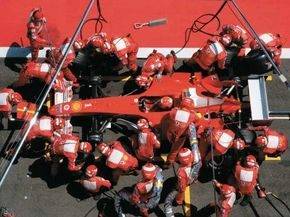
Ferrari doesn’t just participate in Formula 1. It defines the stage. The Prancing Horse sits at the center of the most brutal, expensive, and glamorous sport on earth. No other series commands the same financial stakes or global audience. The circuits span every continent. The history is deep. The glamour is real. But behind the red paint lies a machine built for survival.
This is the story of the open-wheel, single-seat Ferraris that have haunted every track in the world. It starts long before the letters “F1” existed. Enzo Ferrari didn’t start as a manufacturer of his own name. He started as a driver and team manager for Alfa Romeo. The racing was brutal back then. It was called Grand Prix racing. It was dangerous. It was raw.
When World War II ended, the rules changed. The sport rebranded as Formula 1 in 1947. Ferrari was ready. The first car to wear the badge and race under the new rules was the 125 F1. It appeared in 1948. Since that moment, the tally has been staggering. Ferrari has won more races than any other manufacturer. They hold the record for most world championships. The numbers don’t lie. The legacy is cemented in steel and rubber.
But numbers only tell half the story. You have to look at the cars. The sleek lines of the 375 F1. The terrifying beauty of the D50. The innovative Dino 156 F1. These aren’t just relics. They are engineering milestones. Then there are the modern beasts. The F1-2000. The F2007. Each one represents a specific answer to a specific problem on a specific track.
Then there are the men. The drivers who strapped themselves into these rolling bombs. You can’t talk about Ferrari without talking about Alberto Ascari. Or Juan Manuel Fangio in the 50s. The 60s brought Phil Hill and John Surtees. The 70s saw Niki Lauda and Jody Scheckter take the crown. But it was Michael Schumacher who changed the game. Five consecutive titles starting in 2000. Unparalleled. Unmatched.
The saga of these machines and the men who drive them is where the real magic happens. The next section dives into the details. The specs. The wins. The failures. The triumphs.
Ferrari 125 F1
The 125 F1 wasn’t just the first Ferrari Formula 1 car. It was a declaration of war. Enzo Ferrari had spent years building a reputation for racing with other people’s cars. Now, he was bringing the house down. The car featured a 1.5-liter V12 engine. That was unusual for the time. Most competitors were sticking to supercharged four-cylinders or six-cylinders. The V12 offered a smoother power delivery. It sounded like a storm.
The chassis was simple. Tubular space frame. No carbon fiber. No telemetry. Just steel and hope. The first race came in 1948 at the Piacenza Circuit. The driver was Gianfranco Comotti. He finished second. Not a win, but it was a start. The
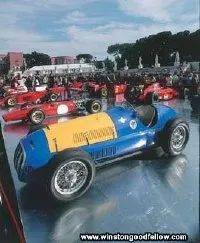
The post-war period was messy. Sports-car racing found its footing faster than Formula 1. Before 1939, the sport was known as Grand Prix racing, a technological showcase fueled by government propaganda and deep pockets. After the conflict, money vanished. Engineering budgets dried up. Fuel was scarce. Venues were damaged. The machinery simply wasn’t there.
Ferrari entered the scene in 1948 with the 125 S sports-racer. Enzo didn’t build a car from scratch. He adapted the 125 S. The result was the 125 F1, the first single-seater to wear the prancing horse badge.
Supercharging and Steel Tubes
The engine remained compact. It was the same 1497cc V-12 that powered the sports car. But chief engineer Gioachino Colombo knew the rules. He exploited them. Supercharging was the standard practice then. It doubled the output. Horsepower jumped from 118 to 230. Both the road car and the race car used a five-speed gearbox.
The chassis was straightforward. Steel tubes formed the frame. Struts and crossmembers held it together. Front suspension mimicked the 125 S. Double wishbones. A transverse leaf spring. Shock absorbers. The rear used longitudinal struts, a torsion bar, and shocks.
The body was torpedo-shaped. It looked good. A large eggcrate grille dominated the long nose. Wheels were exposed. Proportions were proper. It wasn’t just a tub on wheels. It was a designed object.
The 1948 Debut
The 125 Grand Prix, as it was originally called, debuted in September 1948. The venue was Turin. Three cars started. Raymond Sommer drove one. He finished third overall. It was a promising start.
A month later, the team hit its stride. Giuseppe “Nino” Farina drove a Ferrari 125 F1 at Garda, Italy. He won. It was Ferrari’s first Grand Prix victory. The factory had arrived.
The Alfa Romeo Shadow
But they weren’t alone. The cars to beat were Alfa Romeo’s Type 158s. Four of these sophisticated monopostos had survived the war. With minimal refurbishment, they dominated. It was ironic. Enzo had helped build Alfa’s prewar racing foundation. Now his new brand was playing catch-up.
For the 1949 Italian Grand Prix at Monza, Ferrari introduced a new 125. The chassis was longer. The underpinnings were similar. The engine was the story. It now featured double overhead cams. A two-stage Roots supercharger was fitted. Horsepower climbed to 280.
The First World Championship
Formula 1 as a term emerged in 1947. The FIA, headquartered in Paris, established the governing body. In 1950, the FIA created the World Championship of Drivers. Points were awarded per race. The Constructors’ Championship wouldn’t arrive until 1958. Early on, manufacturers relied on their drivers for glory.
Alfa Romeo controlled the early years. They won all six Grand Prix races they entered. Nino Farina, who had left Ferrari after 1949, drove for Alfa. He became the first F1 World Champion. Ferrari lost their star driver to the competition.
Late-Stage Evolutions
Late in 1950, Ferrari tweaked the 125 again. The chassis was shortened. The rear suspension was modified. A de Dion tube and leaf springs replaced the previous setup. The gearbox became integral with the final drive. It was a four-speed unit now.
The car was extremely competitive. But it still wasn’t enough. Alfa Romeo remained king. Farina took the title. Ferrari had to wait for the rules to change. Or for Alfa to fade. The 125 F1 had laid the groundwork. It proved Enzo could build a winner. But the immediate dominance belonged to Milan.
For more fantastic Ferrari information, check out:
-
How Ferrari Works
-
Ferrari Cars
-
Other Cars With Ferrari Engines
-
Ferrari History and Biographies
-
Ferrari Pictures
-
Ferrari F1
-
Ferrari Sports Racing Cars
-
Ferrari 599 GTB Fiorano
Ferrari 375 F1
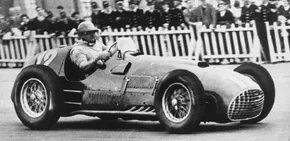
The 375 F1 Breaks the Alfa Stranglehold
The final run of 125s didn’t just fade away. It morphed into the Ferrari 375 F1, the machine that finally cracked Alfa Romeo’s postwar grip on Formula 1.
The regulations were a double-edged sword. You could run a 1.5-liter engine with a supercharger or a massive 4.5-liter naturally aspirated unit. Alfa loved the blower. It made insane power. But it guzzled fuel. Ferrari saw the weakness. Supercharging was Alfa’s strength, but also its Achilles’ heel.
So, Enzo bet on capacity over compression.
The Ferrari 375 F1 kept the 125’s tubular chassis, stretched to a 91.3-inch (2320mm) wheelbase. Suspension? Same. Four-speed gearbox? Same. But under the hood, Aurelio Lampredi had finished his work. The supercharged 1.5 was gone. In its place sat a 4.5-liter V-12. Naturally aspirated. Producing 330 to 380 horsepower.
It was the endgame of Lampredi’s unsupercharged F1 V-12 series. It started with the 3322cc unit in the 275 F1. Then the 4101cc in the 340 F1. Now, the big one.
It debuted at Monza in September 1950. Pole position? No. Close second for most of the race? Yes. Retirement with six laps to go? Also yes.
The hardware was there. The driver was the variable.
Froilan Gonzalez Punctures the Dominance
The man who ended Alfa’s reign was 29-year-old Argentine Froilan Gonzalez. First year as a Ferrari works driver. Son of a Chevrolet dealer. Terrifyingly talented. He had come to Europe originally as a companion to Juan Manuel Fangio. Back then, Fangio drove for Alfa.
The pivot point was July 14, 1951. British Grand Prix.
“Two to three days before the British Grand Prix Juan drove me around the Silverstone circuit in the Alfa,” Gonzalez recalled in Ferrari 1947-1997. “’Pepe,’ he said after we had studied the course, ‘I think you are going to win this one.’”
Fangio was right. The Alfas were thirsty beasts. Average fuel economy? 1.8 mpg.
Ferrari had the advantage. One fewer pit stop. Critical in a race that felt short by modern standards.
“I still have a photograph of us looking across at each other as we drove side by side down the main straight,” Gonzalez remembered. “But his advantage went away at his first pit stop when his crew put in too much fuel, making his car too heavy.”
Stocky Gonzalez crossed the line first. Fangio second.
The streak was over. Alfa Romeos had finished first in every postwar Grand Prix they entered. More than two dozen races. A total stranglehold.
Gonzalez beating his former employer’s car was satisfying. And poignant. It started Enzo Ferrari’s F1 legacy in anger.
The Indianapolis Exception
Here’s a weird footnote for the first decade of F1. Almost all races happened in Europe. Eight per season. Standard.
Except one.
From 1950 to 1960, the Indianapolis 500 counted toward the F1 World Championship. Bill Vukovich? Listed as an F1 points scorer. Rodger Ward? Same.
Traditional F1 teams didn’t care. Traveling to America for one race was impractical. Indy wasn’t treated as a serious points opportunity by the European elite.
Luigi Chinetti saw money. The Ferrari U.S. importer and chief promoter, Chinetti, saw publicity.
So Ferrari built a variation. The Ferrari 375 Indy.
Naturally aspirated 4.5-liter V-12. Tuned for 400 horsepower. Chassis strengthened for the bumps. Aerodynamics improved for the track.
Three were sent to the 1953 Turin Grand Prix as shakedowns. Luigi “Gigi” Villoresi took first.
A fourth was built for works driver Alberto Ascari. He qualified at just over 134 mph. 19th on the grid for the ’52 Indy 500.
The red 375 was not built for Brickyard punishment. Long afternoons? Brutal.
It lasted 40 laps. Then a wheel hub collapsed in Turn 4. Spin. Retired.
It was the only Ferrari to compete in an Indy 500.
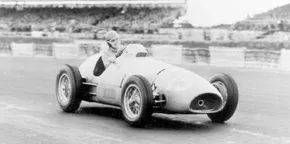
The 1951 season ended on a high note for Ferrari, but it was the aftermath that truly reshaped the sport. After Enzo Ferrari’s team claimed victory at Silverstone with the 375 F1, Alfa Romeo’s supercharged 159s were left scrambling. Ferrari took the next two races, setting up a dramatic finale in Spain. The result? Alfa finished first and third, with Ferraris in second and fourth. That mathematical certainty handed the drivers’ championship to Juan Manuel Fangio.
But look closer at the machinery, and you see a dying breed. The Alfa 159 was a masterpiece of forced induction, yet its supercharged engine was obsolete against Ferrari’s larger, naturally aspirated V-12. More importantly, Alfa’s owner, the Italian government, refused to fund a new car. With development frozen, Alfa Romeo withdrew from Grand Prix racing at the end of the season.
The F2 Pivot
Without Alfa, the FIA faced a grid crisis. Ferrari was the only serious team left. There was no one to challenge them, and barely enough entries to fill the starting line. In April 1952, the sanctioning body made a drastic move: the Formula 1 World Championship would be run to Formula 2 regulations.
F2 had been around since 1948, gaining traction because its 2.0-liter engine limit kept costs down compared to the unrestricted F1 machinery. For Ferrari, this was a home field advantage they were eager to exploit.
They had already been tinkering with the concept. The Ferrari 166 F2, essentially a modified 166 Spyder Corsa sports car, had dominated the previous years. Running a 125 F1 chassis, it won every race it entered in 1949. In 1950, it took 13 of 17 wins. The formula worked. Now, the goal was to perfect it for the World Championship.
Lampredi’s Inline-Four Masterpiece
The project fell to Aurelio Lampredi, Ferrari’s chief engineer. The story of its creation is almost too convenient to be true, yet it happened exactly as recounted in Ferrari I Quattro Cilindri.
Lampredi recalled going into the factory on a Sunday morning to sort out his personal matters. Enzo Ferrari showed up and dropped a bombshell: he had launched a new F2 project with a 2000cc capacity limit.
“What would you do?” Ferrari asked.
“I’d make a 4-cylinder,” Lampredi replied.
“Do make me a sketch then, now.”
A few intense hours later, Lampredi had a design. The result was the Ferrari 500 F2. It housed a 1985cc inline-four engine producing 185 horsepower. The chassis incorporated lessons learned from their F1 efforts, creating a package that was light, agile, and mechanically simple.
A Dominance That Lasted a Century
The competition wasn’t ready.
In 1952, the Ferrari 500 F2 won seven of eight races. Alberto Ascari, a former motorcycle racer from Milan, secured Ferrari’s first World Drivers’ Championship. The car was so fast that Ascari finished first in nine consecutive Grand Prix starts.
That streak stood as a Grand Prix record for over a century. It wasn’t just a lucky run; it was a demonstration of superior engineering. In 1953, the 500 F2 continued its march, winning seven of nine races. Ascari defended his title, leaving critics and rivals alike in the dust.
The 159s were gone. The 375s were retired. The 500 F2 stood alone, a testament to the power of simplicity when executed with precision.
“The combination was virtually unbeatable.”
This period marked the end of an era for supercharged racing engines and the beginning of Ferrari’s golden age of dominance. The grid was filled, the championship was secure, and the blueprint for future success was written in Italian steel.
For more fantastic Ferrari information, check out:
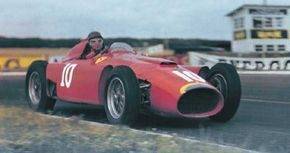
The 1954 Grand Prix season marked a return to form after a two-year hiatus where Formula 2 rules had taken the wheel. The new regulations tightened the screws on power. Naturally aspirated engines were capped at 2.5-liters. If you wanted to boost power with forced induction, you were limited to just 750cc of supercharging.
Ferrari, like most of the grid, chose the naturally aspirated path. They stuck with Lampredi’s four-cylinder engines, carrying over the setup from their 553 F2 machines into a new chassis labeled the 553 F1. The car’s wide, bulbous mid-section looked uncannily like a shark’s torso. So, naturally, they called it the “Squalo.”
It should have worked. It didn’t.
Two specific problems crippled the Squalo’s season. First, Maserati’s 250 F arrived looking like a masterclass in balance. It won the first two races of the year. Then Mercedes-Benz showed up. They entered in the fourth race and immediately began dominating. Juan Manuel Fangio took the title in a Silver Arrow.
Lancia made a late appearance in Spain, the season finale. Their car, the Vittorio Jano-designed Ferrari D50, showed flashes of brilliance with a fastest lap before mechanical failure ended its run. No one realized then that this Turin-built machine would become the key to Ferrari’s survival.
Enter the Super Squalo
For 1955, Ferrari updated everything. Chassis. Suspension. Bodywork. They squeezed more horsepower out of the existing engine. The result was the 555 F1, or the “Super Squalo.”
The car won at Monaco. That was its only victory. Mercedes continued to run away with the championship.
Then came tragedy. Alberto Ascari died at Monza. The two-time world champion was practicing in a Ferrari he had borrowed. Ascari was Lancia’s lead driver. Lancia was already bleeding money. His death added a final, crushing weight to the company’s financial collapse.
By July, the negotiations concluded. Lancia handed over six D50s to Ferrari. They also gave up Vittorio Jano, the engineer behind the car. Fiat stepped in to provide the cash needed to fight the German onslaught.
The Innovations That Defined an Era
The Ferrari D50 was not just a renamed Lancia. It was a technical leap forward. It featured Formula 1’s first V-8 engine. The gearbox and clutch were integrated directly with the final drive, a compact layout that saved weight and complexity.
The fuel tanks were mounted as pods along the sides of the body. This wasn’t just aesthetic. It improved weight distribution. It acted as an aero-dynamic aid. The design was ahead of its time.
Even with these advantages, the D50 couldn’t beat Mercedes in 1955. Fangio won the title again. But history shifted after the carnage at Le Mans later that year. Mercedes withdrew from Grand Prix and sports-car racing. They left the field open.
Fangio’s First Ferrari
Fangio joined Ferrari for the 1956 campaign. The D50 evolved. Ferrari engineers modified the body to move the main fuel tank to the tail. The side pods remained as auxiliary tanks. They altered the suspension. They added bracing in the engine compartment to handle the stresses of the V-8.
The result was a championship win. Fangio and the D50 claimed the title for Ferrari. It was their first since Ascari’s victory in 1953.
The fight was tight. Fangio finished with 30 points. Stirling Moss, driving for Maserati, had 27. Peter Collins finished third for Ferrari with 25 points.
It was a thrilling charge. The German giants were gone. The Italian machinery, born from Lancia’s wreckage and refined by Ferrari’s ingenuity, had finally taken the crown.
Fangio would leave again soon enough. But for a moment, the Squalo had become the shark that ate the competition. The D50 remained a ghost in the machine, a reminder that sometimes, survival means taking what the other guy leaves behind and making it faster.
The Dino 246 F1: Triumph, Transition, and the Rear-Engine Revolution
The 1957 season was a blur of modifications for Ferrari. They took the Lancia D50, renamed it the 801, and stripped it down to the chassis. By the time it hit the track, the original design was unrecognizable. New suspension geometry. Altered V-8 bore and stroke. Complete coachwork overhaul.
The result? Three second-place finishes. Ferrari finished second in the constructors’ standings to Maserati. Bleak.
But the loss in Formula 1 fueled a win elsewhere. The Dino 156 dominated Formula 2. Named after Enzo’s late son, Dino, that 1.5-liter six-cylinder engine was the seed for what would become the Ferrari Dino 246 F1.
For 1958, Ferrari took that successful F2 platform and stretched the engine to 2417cc. 280 horsepower from a six. It debuted at the final race of 1957. In 1958, it came back with improvements: telescopic front shocks and rear disc brakes replacing the old drums.
Identifiable by the distinctive clear cover over the sextet of carburetor stacks, the car propelled Mike Hawthorn to the 1958 World Championship. It wasn’t about wins. It was about consistency.
Hawthorn won only once. Reims. But he added five seconds and a third-place finish across ten races. That was enough to beat Stirling Moss by a single point. Moss had four wins driving for Cooper-Climax and Vanwall. It was also the first year the FIA crowned a Constructors’ Champion, a title Vanwall took from Ferrari.
The Dino returned for 1959. The Ferrari Dino 246 F1 was prettier this time. Sleeker aerodynamics. Dunlop disc brakes on all four corners. A revised suspension. Engine displacement nudged up to 2474cc.
Ferrari ran both the Dino 246 and the 256 V-12 during this pivotal season. They were still at a disadvantage. The rear-engine revolution had begun.
Tony Brooks drove the Dino. He won the French and German Grands Prix. But in the standings, he finished second to Jack Brabham, 31 to 27 points. Brabham’s title was historic. It was the first F1 championship won in a rear-engine car.
Brooks later explained the reality of the machinery.
“Our Dino-engined V6 cars were strong and reliable, but on slow and medium-speed circuits they were no match for the lightweight rear-engine British cars.”
Brabham could split the Ferraris on the grid even at high-speed tracks like Reims. Brooks had to rely on raw power to win the start and hold off the changing tide.
By 1960, the gap was insurmountable. The Ferrari Dino 246 F1 secured only one victory. Phil Hill at Monza. Brabham and the rear-engine Cooper-Climax ran away with both the driver and constructors titles. Lotus-Climax took second. Ferrari finished third.
The era of the front-engine Dino was over.
For more fantastic Ferrari information, check out:
-
How Ferrari Works
-
Ferrari Cars
-
Other Cars With Ferrari Engines
-
Ferrari History and Biographies
-
Ferrari Pictures
-
Ferrari F1
-
Ferrari Sports Racing Cars
-
Ferrari 599 GTB Fiorano
Ferrari Dino 156 F1
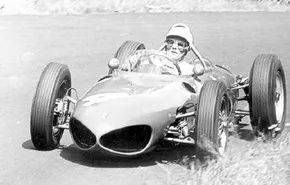
The 156 F1: Ferrari’s Quiet Revolution in the Mid-60s
While Ferrari’s singular win in the 1960 Formula 1 season looked pathetic on paper, Enzo Ferrari understood the long game far better than his competitors. The real action wasn’t on the track. It was in the engineering department.
When the FIA mandated a drop in engine displacement from 2500cc to 1500cc for the 1961 season, the British teams threw a tantrum. They threatened to boycott. Ferrari just shrugged. Carlo Chiti and his team went to work, building a car that met the new rules without complaint.
They leaned heavily on their Formula 2 background. The result was the Ferrari Dino 156 F1. On the surface, it looked standard. Steel tubular chassis. Independent double-wishbone suspension front and rear. Coil springs. Tubular shock absorbers. Dunlop disc brakes at all four corners. But there was one major departure from tradition: the engine sat in the rear.
This wasn’t Ferrari’s first attempt at a mid-mounted layout. They had tested a rear-engine concept at the 1960 Monaco Grand Prix. Richie Ginther drove it to a distant sixth place. It remained a development project through the rest of the year. Chiti used the winter break to refine the machine.
He replaced the original 65-degree V-6 with a more potent 120-degree V-6. This change birthed one of the most recognizable cars in racing history. The Dino 156 F1 featured the iconic twin-nostril “sharknose” and sleek tail bodywork that hid the engine, gearbox, and clutch. It was fast. It was beautiful. It won.
Phil Hill used the car to become the first American F1 World Champion in 1961. He beat his teammate, Wolfgang von Trips, by a single point. Ferrari also secured its first official Constructors’ Championship.
The streak ended abruptly. In November 1961, the “Purge” hit Maranello. Chiti, team manager Romolo Tavoni, and key personnel walked out. The 1962 season became a disaster. The British teams were fielding strong V-8s. Ferrari scored zero wins. They finished tied for fifth in the Constructors’ Championship, which went to BRM.
For 1963, the 156 F1 got a facelift. The sharknose was replaced by a single-inlet body. New chief engineer Mauro Forghieri worked to improve the handling with a revised suspension. Later in the year, he introduced a semimonocoque chassis.
It wasn’t enough to dominate. Ferrari managed only one victory. John Surtees, the former motorcycle world champion, took the flag at the Nürburgring in Germany. The team finished fourth in the Constructors’ Championship. Lotus-Climix took the title.
The Dino 156 F1 remains a historic machine, but the drama of its development tells a starker story about survival in motorsport. Enzo didn’t fight the rules. He adapted. Even when the team fractured and the machinery lagged, the legacy of that 156 horsepower V-6 endured.
The question remains whether the loss of Chiti and Tavoni was a temporary setback or the beginning of a deeper structural flaw. The data from 1962 and 1963 suggests the latter. But the Ferrari Dino 156 F1 itself? It’s still a masterpiece.
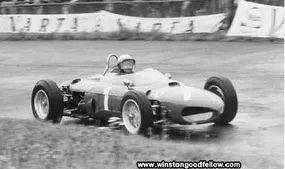
The 512 F1: A V12 Mid-Engine Experiment That Never Saw the Grid
If you look closely at the Ferrari 512 F1, you’re not looking at a car that was destined for Sunday afternoon glory. You’re looking at a engineering dead end that proved just how complicated making a rear-engine Formula One car was in the late 1990s. It wasn’t a failure because the engine blew up. It was a failure because the chassis couldn’t handle the weight distribution.
The project started in 1995. Ferrari wanted to move away from the front-engine layout that had served them poorly in the early 90s. The idea was simple: put the engine in the middle. Better weight balance. Lower center of gravity. Faster cornering. Sounds logical on paper. It didn’t work in practice.
The 512 F1 was essentially a 512 Model F1 chassis with a modified body. They kept the 4.0-liter naturally aspirated V12. That engine made about 650 horsepower. It was the same heart that powered the 512 M and the 512 Tronco. But putting that massive block behind the driver changed everything.
Why Mid-Engine F1 Cars Struggled with Ferrari’s V12
The problem was mass. The V12 is heavy. Putting it in the rear pushed too much weight over the back axle. The front end became light. The car became nervous. It lacked the mechanical grip that drivers needed on street circuits.
Ferrari tested the 512 F1 extensively in 1996. They ran it at Fiorano. They ran it on private tracks. The data was clear. The car was hard to drive. It understeered on entry and oversteered on exit. It was unstable. Not good for a championship-winning team.
The team considered switching engines. They looked at V10s. The V10 was lighter. It was narrower. It fit better in a mid-engine layout. But the change would have cost time. And money. And by then, the decision had already been made.
“The 512 F1 was a beautiful idea that failed in reality. The weight distribution was the killer.” — Anonymous Ferrari Engineer
The Decision to Stay Front-Engine
In 1997, Ferrari announced they were sticking with the front-engine layout. They released the 333 SP for sports racing, but for Formula One, they stayed with the 412 T1 and later the F300. The 512 F1 was shelved. It never raced. It never even finished a test session with a driver in the cockpit at a Grand Prix track.
The 512 F1 remained in Maranello. It sat in a garage. It was a reminder of a path not taken. A reminder that sometimes, the simplest solution is the only one that works.
Ferrari’s next successful mid-engine car would come much later. Not in Formula One. In road cars. The F40. The Enzo. The LaFerrari. But in F1, they would wait until 2015 to finally switch to a rear-engine V6 hybrid power unit. By then, the V12 was
The 158 F1: Ferrari’s Monocoque Gamble
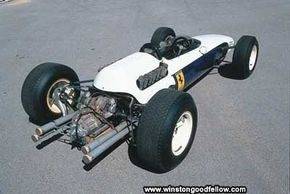
By the time the 1963 Italian Grand Prix rolled around, Scuderia Ferrari was already eyes locked on 1964. They brought the familiar V-6 Dino entries to Monza, but the real story was the prototype lurking in the shadows: the 158 F1. The name wasn’t just marketing fluff. It pointed to a brand-new powerplant—a 1.5-liter, 90-degree V-8 churning out 210 horsepower. That wasn’t just a bump. It was a double-digit jump over the existing V-6, signaling a serious shift in engineering philosophy.
The chassis broke from tradition too. Ferrari usually built tubular frames like they were assembling a bicycle. The 158 F1 used a monocoque structure instead. Aluminum panels were riveted to a framework tailored specifically for the engine. The V-8’s crankcase was so robust they treated it as a stressed member, integrating it directly into the structural integrity of the car. It was lighter. It was stiffer. It was different.
Surtees Takes the Crown
The 158 F1 didn’t cross the finish line first in its debut season. It waited until the sixth race of 1964 to finally grab a checkered flag. Once it found its rhythm, however, the results were relentless. John Surtees and Lorenzo Bandini became podium fixtures. Consistency won championships. Ferrari took the constructors’ title, beating BRM by a margin that proved their speed.
For Surtees, it was history. He became the fifth Ferrari driver to win the World Driving Championship. The final point tally was tight. Just one point separated him from Graham Hill, who was piloting a BRM. It was a nail-biter until the last lap.
There was a bizarre twist in the team’s livery during the final two races of that season. The iconic red vanished, replaced by the blue and white of Luigi Chinetti’s North American Racing Team. Why the switch? It was fallout from Enzo Ferrari’s spat with international racing authorities over the homologation of the 250 LM sports-racer. A dispute over paperwork changed the paint job, but it didn’t dim the shine of the title win.
“The best of my years in Italy, as far as motor racing was concerned, was 1964, the year of the F1 world title with the Ferrari 158,” Surtees, a seven-time motorcycle world champion, told Ferrari 1947-1997. He knew what he had won.
The Flat-12 Experiment
The 158 F1 stayed in the garage for 1965, but it wasn’t the main event anymore. Ferrari’s primary F1 machine that year was the 512 F1. It swapped the V-8 for a 1490cc flat-12 engine. On paper, the numbers looked impressive. 225 horsepower. A different configuration. Better balance? Maybe.
In reality, no rival could touch Lotus and Jim Clark. The British team dominated the constructors’ and driver’s championships with ease. The Ferrari 512 F1 could only muster two second-place finishes. It was fast, but it wasn’t fast enough.
It would be eleven long years before another Ferrari driver stood on the top step of the F1 podium to claim the world title. The technology—monocoque bodies, flat engines—proved Ferrari was willing to innovate. But the organization was pulling in too many directions.
The Cost of Distraction
Surtees didn’t mince words about what went wrong in the years following his title. He had a specific regret about the era.
“I could have won another three world titles, in 1963, 1965, and 1966, when the cylinder capacity for Formula 1 was increased from 1500cc to 3000cc,” Surtees noted. “But, for one reason or another, we ended up by giving away an incredible number of victories.”
The problem wasn’t a lack of talent or machinery. It was resource allocation. Ferrari was fighting on too many fronts. When preparations for Le Mans took priority, Formula 1 inevitably fell to the back burner. They could partially make up for the F1 losses with success in sports prototypes. The Ferrari ‘P’ models, from the 250 to the 275, P2, and P3, were wonderful machines. Powerful. Well-balanced. A joy to drive.
But for an F1 driver chasing the global championship, the focus was fractured. The energy was spread thin across sectors that demanded total commitment. The technology was there. The drivers were there. The opportunity was there. But the structure wasn’t.
Ferrari 312 F1
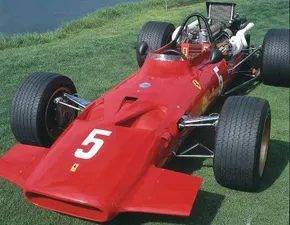
Mauro Forghieri didn’t just tweak an engine for 1966. He took the bones of Ferrari’s 3.3-liter sports car V-12 and forced it into the new 3.0-liter Formula 1 natural aspiration window. The math was brutal. Keep the 77mm bore. Chop 5mm off the stroke, landing at 53.5mm. Result: 2989cc.
It wasn’t enough to fit the box. Forghieri cranked the compression ratio. Swapped in dual-cam heads. Planted two spark plugs per cylinder. Topped the mechanical chaos with Lucas fuel injection.
The beast was named the Ferrari 312 F1.
Surtees, Dragoni, and a Broken Partnership
John Surtees started the 1966 calendar by winning the non-championship South African Grand Prix in January. The trophy looked good on the shelf. The car did not feel fast. Surtees felt starved for power.
The tension didn’t stay contained in the cockpit. By mid-season, Surtees and team manager Eugenio Dragoni were at war. Publicly. Privately. Constantly.
Surtees managed to win the Belgian Grand Prix in June. A flash of brilliance. Then the rot set in. By September, he walked away.
Ludovico Scarfiotti cleaned up in Italy. That was it. Ferrari’s only other F1 win. The constructors’ title? Brabham-Repco took the crown. Ferrari sat in second, far behind, watching their new engine rule experiment bleed points.
1967: Lighter, Faster, Still Lost
Ferrari tried again in 1967. The Ferrari 312 F1 got a revised 36-valve V-12. The chassis was stripped down, made lighter.
It didn’t matter.
No wins. Not a single one. The updates were cosmetic against a shifting competitive landscape.
1968: Wings, 400 Horsepower, and One Victory
Then came 1968. Jacky Ickx won the French Grand Prix. One win. That was the tally for the year.
But the engineering gains were real. The car now ran four-valve heads. This configuration pushed output past 400 horsepower. First time for a Ferrari in F1.
The real story, though, was aero.
At the Belgian Grand Prix in June, Maranello rolled out something that stopped traffic. Small wings had been tested on noses and tails by various teams. Clutter. Drag. Ferrari ignored the ground.
They mounted an aerofoil on struts high above the gearbox. Just behind the cockpit.
It worked.
By September at Monza, the wing was adjustable. Driver-controlled. A game-changer in real-time.
1969: The Withdrawal
1969 brought silence.
The Ferrari 312 F1 failed to score a victory. Period.
After the Italian Grand Prix — the eighth of eleven races — Ferrari pulled the plug. Temporary withdrawal from F1. They needed to focus on the flat-12 engine project.
Luigi Chinetti’s North American Racing Team kept the cars running. They took them to the final three races. Best result? Pedro Rodriguez finished fifth at Watkins Glen.
Three wins in four seasons.
The 312 F1 was a bridge. A necessary, painful, high-horsepower bridge between the old V-12s and the flat-12 future. It proved Ferrari could still win. It proved they could innovate. It just couldn’t stay fast enough for long.
The engine rules changed again. The war continued.
For more fantastic Ferrari information, check out:
-
How Ferrari Works
-
Ferrari Cars
-
Other Cars With Ferrari Engines
-
Ferrari History and Biographies
-
Ferrari Pictures
-
Ferrari F1
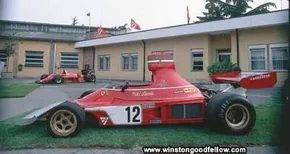
The Long Road Back: Ferrari’s 1970s F1 Journey
The 1970s started on a low note for the Prancing Horse. Ferrari’s Formula 1 drought stretched well into the decade, with only a second-place finish in the 1970 constructors’ championship to show for it. The team was running the innovative 312 B, a machine featuring a semistress-bearing flat-12 engine that managed four wins. But even then, the shadow of the Ford DFV V-8 loomed large.
That Cosworth-built V-8, bankrolled by Ford, had won its debut at Zandvoort and quickly dominated the grid. It was a burr under Maranello’s saddle—a technological gap that kept Ferrari from the top step.
A Strategic Pivot
The turning point arrived in 1974. Ferrari pulled out of endurance sports-car racing to pour every resource into Formula 1. The restructuring was swift and severe. They hired Austrian driver Niki Lauda from BRM as the number one seat. Mauro Forghieri, the legendary chief engineer, returned after a year away. Luca Cordero di Montezemolo took the reins as team manager, cutting through the political intrigue that had plagued the team for years.
The results were immediate. The final iteration of the old car, the 312 B3, saw Lauda take victories in Spain and the Netherlands. Teammate Clay Regazzoni won in Germany. Ferrari finished second to McLaren-Ford in the standings, but the momentum had shifted.
The Transversale Revolution
For 1975, Ferrari unveiled the 312 T Series. The “T” stood for transversale. It wasn’t just a name change; it signaled a fundamental packaging shift. The five-speed gearbox was mounted east-west ahead of the rear axle, lowering the center of gravity and improving handling. The suspension was completely redesigned. Lauda, known for his meticulous approach, used his test driver skills to hone the machine to perfection.
The car debuted in South Africa. By the Monaco Grand Prix, Lauda and the 312 T were already winners. The car won six of the final eleven races. Lauda took the World Championship, and Ferrari secured its first constructors’ title since 1964. The drought was officially over.
The 1976 Nightmare and Miracle
Ferrari looked poised to repeat in 1976 with the 312 T2. Underneath, it was nearly identical to the previous year’s car. The bodywork changed, however, with higher side panels and revised wings and spoilers. Lauda and Regazzoni dominated early, winning five of the first eight races.
Then came the Nurburgring.
Lauda’s 312 T2 caught fire. He was pulled from the wreckage by fellow drivers and a marshal. In the hospital, a priest administered last rites. It was a life-threatening crash.
Against all odds, Lauda recovered. Five weeks later, he returned for the Italian Grand Prix, driving the 312 T2 to a fourth-place finish. Ferrari held onto the constructors’ crown. Lauda withdrew from the final race in Japan due to monsoon conditions, losing the drivers’ title to James Hunt by a single point. It was a heartbreak that defined the era, but the car remained competitive.
Lauda’s Return and Departure
The 312 T2 returned in 1977, proving the 1976 title loss was an anomaly. Lauda, now driving alongside Carlos Reutemann, consistently scored points and podiums. Ferrari won the constructors’ title comfortably, and Lauda reclaimed the drivers’ championship.
Yet, the relationship was fraying. Animosity between Lauda and the team, stemming from the 1976 incidents, led to his departure at the end of 1977. (He and Enzo Ferrari would reconcile years later.)
The Rise of Ground Effects
The 1978 car, the 312 T3, showed significant aerodynamic and suspension updates. It debuted at the South African Grand Prix. Carlos Reutemann won at Long Beach in the fourth race, adding two more victories. Gilles Villeneuve also claimed a win. Ferrari finished second to the Lotus-Ford in the constructors’ standings, but the speed was there.
In 1979, Ferrari brought in Jody Scheckter, who had driven for Wolf-Ford the previous year. He paired with Gilles Villeneuve for what became one of the most effective teammate dynamics in F1 history.
“We weren’t just teammates,” Scheckter recalled. “We were friends and wanted to work together to win races, so we made an agreement to share all our technical information.”
That cooperation paid off immediately. At the debut of the new 312 T4 in South Africa, the duo finished first and second. The 312 T4 marked Ferrari’s transition to true ground effects. Instead of relying solely on downforce from wings, the car’s bodywork managed airflow along the sides and underbody to generate massive adhesion.
Scheckter won three races. Villeneuve won three. Scheckter became World Champion, Villeneuve was runner-up, and Ferrari won the manufacturers’ title—their fourth in five years.
The End of an Era
The 1980 season brought the 312 T5, the final evolution of the series. While the bodywork was modified, the fundamental limitation remained: the flat-12 engine.
Ground effects had evolved rapidly, favoring narrow, compact powerplants. The Ford-Cosworth V-8, used by Alan Jones and his Williams-Ford, was easier to package for airflow management. Ferrari’s flat-12 was simply too wide. The 312 T5 struggled to compete, with its best results being fifth-place finishes at Long Beach, Monaco, and Canada.
Ferrari was famous for the roar of its twelve-cylinder engines, but the close of 1980 marked a stark reality check. It would be nine years before an F1 car powered by a twelve would race again. The flat-12 era in Formula 1 was ending, not with a bang, but with a slow fade into irrelevance against the changing science of aerodynamics.
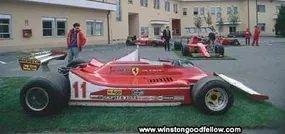
The 126 C: Ferrari’s Turbo Leap
The 126 C series wasn’t just a car. It was Ferrari’s desperate, high-stakes gamble to survive in Formula One during the turbo era. When the regulations changed, pushing teams toward forced induction, Ferrari sat on the sidelines while others adapted. The 126 C was the response. A messy, complex, and ultimately groundbreaking entry into a new world of performance.
From Atmosphere to Boost
Before the 126 C, Ferrari relied on naturally aspirated V12s. The 126 C marked a radical shift. The team installed a 1.5-liter V6 engine with twin turbochargers. This wasn’t a mild tweak. It was a complete architectural overhaul. The goal was simple: generate more power to compete with the dominant Renault and Williams units. The result was immediate power, but it came with a heavy price tag in terms of weight and complexity.
The chassis, derived from the 126 C2, struggled to handle the immense torque. Drivers complained about understeer and reliability issues. Yet, the raw potential was undeniable. The engine produced over 500 horsepower, a figure that was competitive at the time, if not always reliable.
Gilles Villeneuve’s Final Stand
The 126 C3 version became the car of Gilles Villeneuve’s final season. Villeneuve, known for his fearless driving style, pushed the car to its absolute limits. He secured two victories in 1981. One at Zolder, another at Dijon. These wins proved the car could win, but they also highlighted the fragility of the setup. Villeneuve’s death later that year cast a long shadow over the 126 C’s legacy. The car was fast, but it was also a machine that demanded everything from its driver and gave nothing back in terms of safety or consistency.
The 126 C4: A Flawed Attempt
By 1982, the 126 C4 arrived. It was lighter. It was sleeker. It was also too little, too late. The competition had evolved. The Honda-powered cars were proving superior in both power delivery and reliability. The 126 C4 failed to make a significant impact. It finished races when it could, but wins remained elusive.
The 126 C4 represented the end of an era for Ferrari’s early turbo experiments. It was a transitional car. A bridge between the old V12 philosophy and the new turbo reality. The team learned valuable lessons from its failures. These lessons would inform the more successful 156/85 that followed in 1985.
Legacy of the 126 C
The 126 C series is often overlooked in Ferrari’s history books. Fans remember the V12s of the 70s and the Schumacher-dominated 90s. But the 126 C was pivotal. It forced Ferrari to rethink its engineering approach. It introduced turbocharging to Maranello. And it provided a platform for drivers like Villeneuve and Didier Pironi to fight on the front line.
The 126 C wasn’t pretty. It wasn’t consistently fast. But it was necessary. Without the 126 C, Ferrari
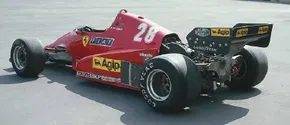
The Turbulent Rise of Ferrari’s Turbo Era
The 312’s flat-12 engine had been Ferrari’s F1 mainstay for a decade, but by 1980, the writing was on the wall. Even as the team raced with little success that season, Ferrari was hard at work developing a state-of-the-art turbocharged engine. It was unveiled on the second practice day for the Italian Grand Prix at Imola in September, and it was a half-second faster than the naturally aspirated flat-12 312 T5.
Development continued over the winter for what would be called the 126 C. It reprised Ferrari’s tradition of a tube frame overlaid with aluminum sheeting, but was powered by a 1496cc V-6 with two German KKK turbochargers, a pair of intercoolers, and four valves per cylinder. Horsepower was quoted at 540, 25 more than Ferrari’s most-powerful flat-12.
Despite its newness, the engine proved remarkably reliable, but the chassis was a handful. Still, on the strength of Gilles Villeneuve’s brilliance and the new engine’s prodigious power, the 125 C won the Monaco Grand Prix, just its sixth race. The Canadian won again in Spain, but wrecks and chassis problems plagued the team the rest of the year, and Ferrari finished fifth among 11 entries in 1981 constructors points.
To rectify the chassis situation for 1982, Ferrari hired Englishman Harvey Postlehwaite. His 126 C2 chassis of composite materials reinforced by carbon fiber made all the difference, as did an even more-powerful turbo engine.
But drivers Villeneuve and Frenchman Didier Pironi were never the team that Jody Scheckter and Villeneuve had been. When Pironi deprived Villeneuve of a victory at Imola against team orders, the two never spoke again.
Then, in May 1982, racing lost one of its stars. In practice for the Grand Prix of Belgium, Villeneuve crashed the Ferrari. He died in the hospital hours later. In June, a crash in Canada sidelined Pironi for the season. Frenchman Patrick Tambay and American Mario Andretti filled in ably, sustaining enough points for Ferrari to win it first constructors championship since 1979.
With ground-effects side skirts banned for 1983, Ferrari’s 126 C3 showed completely revised bodywork. Tambay was joined by countryman Rene Arnoux as team drivers and they finished third and fourth, respectively, in points. Arnoux’s three victories, Tambay’s one, and consistently high finishes were enough to capture for the Scuderia a second consecutive constructors championship.
In 1984, the 126 C4 and the rest of the field were outclassed by McLaren’s MP4 and its drivers Niki Lauda and Alain Prost. They won 12 of the season’s 16 races, and Ferrari finished a distant second in the constructor chase.
F1’s Turbo era lasted through 1988, but Ferrari’s only other strong showing came in 1985, with the 156/85. It boasted Maranello’s first bodyshell designed completely by computer. Italian Michele Alboreto won twice with it, at Canada and Germany, and the team finished second to McLaren-TAG for the constructors championship.
For more fantastic Ferrari information, check out:
-
How Ferrari Works
-
Ferrari Cars
-
Other Cars With Ferrari Engines
-
Ferrari History and Biographies
-
Ferrari Pictures
-
Ferrari F1
-
Ferrari Sports Racing Cars
-
Ferrari 599 GTB Fiorano
The End of Turbo Era and the Gearbox Revolution
By 1988, Formula 1’s turbocharged engines were generating absurd amounts of power. Ferrari’s F1/86 and F1/87 models churned out nearly 1,000 horsepower during qualifying sessions and around 900 in race trim. The FIA intervened, slashing allowed turbo boost for 1988 and completely banning turbos for 1989.
The switch back to naturally aspirated engines meant Ferrari brought back the V-12. The F1/89’s unit displaced 3498cc. It featured five valves per cylinder—three intake, two exhaust. Power output hit 600 horsepower at 12,500 rpm.
But the real story was the transmission. Ferrari developed a seven-speed electro-hydraulic gearbox. It was a manual box that shifted automatically via switches on the back of the steering wheel. Drivers no longer needed to take their hands off the wheel to reach for a lever. The advantage was obvious. Every F1 rival copied the system quickly. Within years, paddle-shifted manuals appeared in high-performance road cars, including several Ferraris.
John Barnard, Ferrari’s England-based designer, created the F1/89. The car started strong. Nigel Mansell won the season opener in Brazil. Then electronics failed. Mansell won in Hungary. Gerhard Berger won in Portugal. That was the extent of it. Ferrari finished a distant third in the constructors’ championship.
Prost vs. Mansell: A Divided House
Ferrari entered 1990 optimistic. They had the Ferrari F1 641. Revised bodywork shed weight. The V-12 had a shorter stroke. Output jumped to nearly 700 horsepower. Alain Prost joined Nigel Mansell. Prost was the reigning champion, having won his third title with McLaren-Honda in 1989.
The season became a battle between Ferrari and McLaren. Then it became a duel between Prost and Mansell. The rivalry within the team hurt Ferrari.
“If we had been able to cooperate as I had hoped,” Prost said, “I am sure Ferrari would have had a world championship to celebrate that year.”
Instead, it was as close as Ferrari came to another title for nearly a decade. Prost lost the championship in the final race. Ayrton Senna pushed his Ferrari off the track at the Adelaide Street Circuit during the Australian Grand Prix. Senna won the race and the title with McLaren-Honda.
Legacy of the F1 641
The F1 641 remains a significant chapter in Ferrari’s history. It marked the transition from turbo dominance to naturally aspirated engineering. The paddle-shift gearbox changed how cars were driven forever. The internal conflict between Prost and Mansell highlighted the dangers of intra-team rivalry.
Senna’s move in Australia remains controversial. It cost Prost the championship. Ferrari missed out on a potential title. The team struggled to replicate this level of performance in the following years.
The innovation of the paddle-shift gearbox revolutionized race- and sports-car technology, influencing designs for decades.
For more information on Ferrari’s engineering and history, check out:
- How Ferrari Works
- Ferrari Cars
- Other Cars With Ferrari Engines
- Ferrari History and Biographies
- Ferrari Pictures
- Ferrari F1
- Ferrari Sports Racing Cars
- Ferrari 599 GTB Fiorano
The Ferrari 412 T2: A Final Stand for the V-12
The drought ended, but the pain lingered. Ferrari had lost the 1990 constructors’ title to McLaren-Honda by a mere 11 points, a margin so thin it might as well have been zero. That loss triggered a collapse. For three full seasons, the Scuderia went winless. It wasn’t until the 1994 412 T1 arrived that the curse was finally broken.
The 412 T1 was a course correction. It marked the return of conventional pushrod suspension, ditching the electronic active system from the disastrous 1993 F93A that had plagued the team with reliability nightmares. It also saw the return of John Barnard, the engineer briefly seduced by Benetton before coming back to Maranello.
Barnard’s influence was immediate. He redesigned the nose, raising it significantly compared to the F93A. He shifted the sidepod air ducts and radiators forward to manage airflow more efficiently. The result was a car that balanced better. It was reliable enough to secure podiums in the first five races of the 1994 season.
But the engine was gasping for air. Ferrari responded quickly with the 412 T1B, debuting at the French Grand Prix in July. Gerhard Berger took third, and two races later in Germany, he snapped the three-plus season losing streak with a victory. Jean Alesi was also climbing the podium regularly, pushing Ferrari to third in the constructors’ standings. The team looked healthy again.
Shrinking the V-12
By 1995, the rules had changed. Maximum engine capacity was slashed to 3.0 liters. Ferrari’s response was radical: a new, compact V-12 that still pushed out over 600 horsepower at 17,000 rpm. This powerplant powered the Ferrari 412 T2.
The chassis itself was refined. The 412 T2 was slightly shorter in both wheelbase and overall length. This reduction allowed engineers to move the engine about 3.5 inches (10cm) closer to the platform’s center of gravity. The 37-gallon (140-liter) fuel tank was relocated as well. The changes made the car more balanced and easier to drive than its predecessors.
The Last V-12 Victory?
On paper, the 412 T2 was competitive. In practice, it was fighting a losing battle against the dominant Benetton and Williams cars, both powered by Renault engines. The Ferrari team collected podiums, but wins were scarce.
Then came Montreal.
Jean Alesi took the lead at the Canadian Grand Prix, and the emotion of the moment was palpable. He wasn’t just driving; he was breaking a spell that felt heavier than it should have been.
“I started to cry in the car,” Alesi later recalled. “I couldn’t see the road because when I braked the tears were getting in my visor. It was not the way I expected to react. I told myself to get back to driving and see what happened.”
He held the lead. He won.
It was a joyous, messy, human victory. But it was also a endpoint. That emotional win would be the last for a Ferrari V-12 in Formula 1. The engine was dying. The following season would bring a new power unit, a new driver, and the foundation for a period of domination the sport had never seen.
The V-12 era was closing. The silence that followed was deafening.
Ferrari F310B
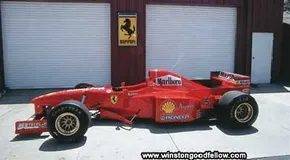
The shift in Maranello’s strategy didn’t happen overnight. By late 1995, Ferrari had already scrapped the V-8 and V-12 options on the table. The decision landed on a Ferrari F310 V10 engine. It was the first time the team committed to a ten-cylinder setup in Formula 1.
The timing was everything. Michael Schumacher was dominating for Benetton-Renault. Two weeks after his home victory at the Hockenheimring, Ferrari made their move. They signed the two-time world champion to a two-year, $24 million contract.
The F310 was ready. The 2998cc V-10 was compact. That compactness let engineers refine the aerodynamics. The engine made 700 horsepower at launch. By mid-season, that figure climbed to 725 horsepower.
Andrew Frankl, an F1 reporter for FORZA magazine, broke down Schumacher’s edge. He listed five traits. Endless testing. Technical skill. Confidence. Obsessive attention to detail. And the will to win.
Eddie Irvine joined as Schumacher’s teammate. He came from Jordan. Irvine scored the team’s first points in the season opener in Australia with a third-place finish. Schumacher matched it in Brazil. He retired in Argentina, then caught fire.
Over the final 13 races, Schumacher took three wins, three seconds, and a third. He finished third in the driver’s standings. Damon Hill took the title with Williams-Renault. Ferrari was second in constructors, but the gap was significant.
The 1997 season brought the F310B. Ferrari tweaked the aero. The V-10 pushed 750 horsepower. They installed a new differential to fix reliability. Williams-Renault still won the constructors’ title, but the points gap narrowed.
Schumacher entered the final race in Jerez, Spain, with a one-point lead over Jacques Villeneuve. 78 to 77.
Lap 48. Villeneuve’s blue-and-white Williams pulled alongside. He was going for the pass. Schumacher didn’t budge. He turned right. His front tire kissed Villeneuve’s sidepod.
Schumacher hit the gravel trap. Villeneuve limped on. He finished third.
Villeneuve finished with 81 points. Schumacher had 78. The FIA declared Schumacher’s move intentional. They disqualified him from the championship. Villeneuve took the title.
The fallout was immediate. The rules changed after that. But the damage was done. Schumacher left Jerez with nothing but a DNF on his record and a stain on his reputation.
Why the Ferrari F310 V10 Engine Matters Today
The Ferrari F310 V10 engine set a template. Compact, high-revving, and powerful. It forced other teams to rethink their packaging. The success of that configuration didn’t end in 1997. It echoed through the early 2000s.
Schumacher’s driving style had evolved. He wasn’t just fast. He was calculating. The Jerez incident wasn’t a slip. It was a tactical move gone wrong. Or right, depending on who you ask.
The FIA’s reaction was harsh. Disqualification. No points. No trophy. It sent a message. You don’t bully your way to a title.
But the car itself? It was a weapon. The 750 horsepower F310B kept the pressure on Williams. It just lacked the one edge Schumacher needed.
How Ferrari Improved Reliability After 1997
The reliability issues in 1997 were visible. The new differential helped. But the real fix came later. In 1998, Ferrari introduced the F399. It was lighter. Stiffer.
The V-10 evolved. The F310 was a proof of concept. The F399 was the refinement. Schumacher won the title in 1998. The 1997 controversy faded. The results spoke louder.
But the shadow of Jerez lingered. It reminded everyone that margins are thin. One point. One lap. One move.
The engine room remained the heart of the operation. The V-10 era was peaking. Then it was over. The regulations changed. The V-10s were banned in 2006.
We got used to the sound. The scream of a 19,000 RPM ten-cylinder. It was distinct. Ferrari’s signature.
Without it, the cars sound different. Flatter. Smoother. But less visceral.
The F310 remains a key moment. It marked the arrival of Schumacher. It marked the dominance of Williams. It marked the start of a feud that would define a decade.
Schumacher went on to win four more titles. But the first one with Ferrari? It slipped away. On a gravel trap in Spain.
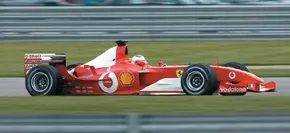
By 1998, the mandate from Maranello was absolute: Formula 1 supremacy. It wasn’t just a hope. It was an expectation that rippled through the factory, the paddock, and to fans globally.
Michael Schumacher knew what he was walking into. He’d seen the “Ferrari legend” from the outside as a rival, but inside the gates, the weight of it hit differently.
“In a way,” he later reflected, “I wasn’t ready for the ‘Ferrari legend.’ I observed it from the outside, as a mere spectator, but I had no idea what it meant to be part of it…. But on that first visit to Maranello [in 1995], I couldn’t stop at mere analytical considerations. I began to sense something, like goose pimples.”
He understood the gravity. After two titles with Benetton, this was a new stage.
The final pieces of the puzzle slid into place in 1998. Rory Byrne, the South African designer who had engineered Schumacher’s Benetton championship cars, joined in late 1996. His first Ferrari creation was the F300. Alongside him was Ross Brawn, Technical Director. Brawn wasn’t just overseeing day-to-day development; he was a master strategist, capable of executing preset plans or improvising in the heat of battle.
The result was a season-long war against McLaren-Mercedes. It was tight. Of the first 12 races, Mika Hakkinen took six, Schumacher five. Schumacher tied the count with a home victory at Monza, the 13th race. But Hakkinen closed strong, winning the final two events to secure the title.
The F399 and the Broken Leg
For 1999, Ferrari introduced the F399. They moved the V-10 engine forward in the chassis. Aerodynamics got a boost with a new front wing, side pods, and air intake. Ferrari claimed more than 750 horsepower from the 2997cc unit.
McLaren-Mercedes remained the nemesis. The opening rounds were a shuffle: Eddie Irvine won the first, Hakkinen the second, Schumacher the third and fourth. The fight raged until the British Grand Prix. That’s when Schumacher suffered a terrible crash, breaking his leg and sitting out the next six races.
Irvine picked up the slack. He won in Austria and Germany, climbing into the championship lead heading into Japan. Hakkinen won that final race, taking the driver’s crown by just two points—76 to 74.
But Ferrari salvaged silver. Irvine and Schumacher combined for six wins, securing the constructors’ championship for the first time since 1983. It was a milestone, but it didn’t satisfy the people in Maranello.
“We’ve got a great team, both from a human and technical point of view,” Brawn said while introducing the logically named F1-2000. “We deserve nothing less than both world titles this year.”
Rubens Barrichello joined as the No. 2 driver.
The Wind Tunnel Advantage
The F1-2000 looked like the F399 on the surface, but the design was fundamentally different. It was the first car developed in Ferrari’s new wind tunnel. The nose was slimmer. The flanks were reprofiled. The undertray airflow was superior. These changes improved aerodynamics by 10 percent—a massive margin in F1.
The V-10 was lighter, pushing around 800 horsepower, with an adjustable mounting location. The car was so light that engineers had to add nearly 180 pounds of ballast to meet minimum weight regulations.
Schumacher won the first three races. He looked unstoppable. Then McLaren woke up. Hakkinen fought back, leading the championship with four races to go. But Schumacher closed the season with a string of wins, becoming Ferrari’s first driver’s champion since 1979. Ferrari also reclaimed the constructors’ crown in a gritty battle with McLaren.
Dominating the Tracks
The F2001 built on that momentum. Rule changes required the front wing to sit two inches higher than before. The F2001’s nose sat lower, with wings curving upward to meet the regulations.
“Testing in the wind tunnel proved that for this car this configuration is best,” Byrne said. “The first few races will show who was right in their design.”
They were right. The F2001 dominated. Ferrari scored a then-record 179 points for the constructors’ title. Schumacher’s 123 points to win his second consecutive world championship were almost double those of second-place finisher David Coulthard.
The following year, the F2002 arrived with new sidepods, revised rear suspension, and a lighter, shorter gearbox for faster shifts. Two-way telematics became legal, allowing real-time data flow between the car and the pits.
The competition had no answer. The F2002 won 15 of 17 races. Schumacher took 11 wins. Barrichello took four. Ferrari set another record with 221 constructor’s points—Williams-BMW finished second with 92. Schumacher tied Juan Manuel Fangio’s record of five driver’s world titles.
Four consecutive constructor’s championships. Three straight driver’s titles. It looked like a dynasty cemented in stone.
The 2003 Challenge
But the streak was under threat in 2003.
The team started the season with the aging F2002 chassis. Schumacher failed to reach the podium in the first three races. As the season hit the halfway mark, the table had flipped. Leading in driver’s points was Kimi Raikkonen, the new hotshot for McLaren-Mercedes. And his team sat atop the constructors’ standings.
The invincibility was cracking. Or was it just a pause?
The F2003-GA and the Brawl for the Crown
The narrative shifted at San Marino. Ferrari didn’t just update the F2002; they unleashed the F2003-GA. The “GA” suffix honored Gianni Agnelli, Fiat’s legendary patriarch who passed away before the car even hit the track. This wasn’t cosmetic. The aerodynamics were tighter. Cooling efficiency improved. The wheelbase shrank by two inches, making it twitchier, more responsive. And the heart? A V-10 screaming up to 19,000 rpm. It was a mechanical shriek that defined an era.
Schumacher didn’t hesitate. He took the debut win in Spain. Then Austria. Suddenly, the championship wasn’t a procession. It was a brawl. Williams-BMW had arrived, and they were fast. Juan Pablo Montoya won in Monaco. Ralf Schumacher, Michael’s younger brother, took the chequered flag at the Nurburgring. The BMW-powered rivals were everywhere. They won in France. By the time three races remained, Williams-BMW led the constructors’ standings. The driver’s title? A three-way war: Schumacher, Kimi Raikkonen, and Montoya.
Securing History in Italy and Indianapolis
The tension peaked in Italy. Schumacher wrestled the wheel, fighting off Montoya’s pressure all the way to the finish line. One win. Then came the rainy U.S. Grand Prix at Indianapolis. Schumacher drove through the slick conditions to take the checkered flag. That was enough. The math was done. He secured his record sixth world championship.
Ferrari wasn’t done. Rubens Barrichello took the final race in Japan. That victory didn’t just add a point to the tally; it secured Ferrari’s fifth consecutive constructors’ title. A dynasty cemented in rubber and steel.
The F2004: Perfection Redefined
The F2004 looked almost identical to its predecessor. Deceptive. Rory Byrne, the man behind the drawings, told reporters the truth at the launch. “Every area of the car has been revised,” he said. “So almost every component has been redesigned.”
Don’t let the similar silhouette fool you. The engine was new. The gearbox, stronger. The chassis, lighter. The suspension, more compliant. It was an evolution disguised as a continuation.
The result was arguably the most dominant season in Formula 1 history. Schumacher won the first five races. The streak died in the tunnel at Monaco, an accident that scattered the field. But Schumacher regrouped. He reeled off seven more wins in a row. Thirteen victories in total. His career win count climbed to 82.
Barrichello added two wins of his own. Ferrari won 15 of the 17 races. The statistics are staggering. Schumacher took his seventh world title with a record 148 points. Ferrari set two more records: a sixth-straight constructors’ crown and 262 points as a team.
There was no controversy left. No doubt. Just speed.
Why This Dominance Matters
Looking back, the 2004 season stands as a anomaly in modern motorsport. The gap wasn’t just about speed; it was about reliability and consistency. While rivals battled mechanical failures and aerodynamic deficits, Ferrari simply kept moving forward.
The F20
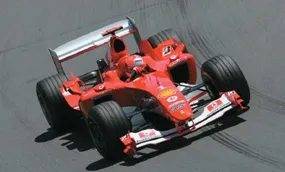
The Last Chapter of the V10 Era
The Ferrari F2007 didn’t just drive; it carried the weight of a dynasty. This was the car that closed the book on Formula 1’s naturally aspirated V10 engine era, a mechanical symphony that had defined the sport for a decade. When it hit the tarmac in 2007, it wasn’t just a race car. It was a statement. A final, furious scream from an age about to go silent.
Fernando Alonso and Kimi Raikkonen sat behind the wheel. Two drivers who knew exactly what they were fighting for. The F2007 was sleek, aggressive, and undeniably fast. But speed alone doesn’t win championships. Consistency does. And Ferrari had it in spades.
The season started with a bang. Alonso took the first win in Bahrain. The engine roared, the tires smoked, and the crowd went wild. It was pure theater. But behind the spectacle, engineers were tinkering with a machine that pushed the boundaries of what was legally permissible. The double diffuser. A rear wing design that generated more downforce than competitors thought possible. It was a gray area. A loophole. And Ferrari knew it.
By the middle of the season, the F2007 was untouchable. Raikkonen won six races. Alonso won seven. The team dominated. But dominance breeds resentment. And in 2007, that resentment boiled over.
The Spygate Scandal
You can’t talk about the Ferrari F2007 without addressing the elephant in the room. The espionage scandal. Or “Spygate.” As it came to be known.
McLaren’s lead engineer, Nigel Stepney, allegedly received detailed technical data from Ferrari’s garage in Maranello. CAD files. Wind tunnel results. Internal emails. All of it. The idea was simple. Steal Ferrari’s secrets to build a faster car. Simple. Until it got caught.
The fallout was immediate. Ferrari was banned from the 2007 constructors’ championship. A massive fine followed. $100 million. The largest fine in sports history at the time. The team’s points were stripped.
But here’s the twist. The drivers still got to keep their points. Alonso and Raikkonen finished first and second in the drivers’ standings. The team was punished. The drivers were not.
It was a bizarre outcome. A moral victory wrapped in a legal defeat. Ferrari lost the right to be called world champions. But they still held the trophy. Or at least, the memory of it.
Performance and Specifications
Under the hood sat a 3.0-liter V10 engine. Code-named Type 056. It produced around 900 horsepower. Revving to 19,000 RPM. The sound was distinctive. High-pitched. Violent. It screamed like a jet engine.
The chassis was designed by Aldo Costa and Ross Brawn. Both veterans. Both legends. The F2007 featured a semi-automatic sequential gearbox. Seven gears. Fast shifts. Seamless power delivery.
Brakes were carbon-carbon discs. Massive. Efficient. Suspension used pushrod actuators at the front and pullrod at the back. A setup that priorit
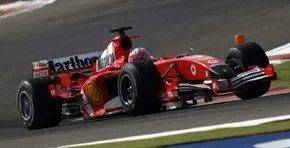
Schumacher’s 2004 dominance was absolute, but the post-race celebrations were brief. The FIA’s relentless schedule left zero room for reflection. By January 2005, with his 36th birthday recently passed, Michael Schumacher was already fielding questions about longevity.
“It was definitely a fabulous season,” he told the press, deflecting the aging narrative. “Not just because we were so successful, but also because of the atmosphere within our team… Formula One is a team sport. It’s about everyone working together, not a one-man show.”
He pointed to reliability as proof of Ferrari’s internal strength. The team had completed over 50 races without a technical retirement. That consistency, he argued, was the foundation for their titles. Yet, fitness remained a personal metric. He claimed to feel younger than 36, citing regular soccer matches with Fernando Alonso. The Renault driver was a decade younger. Schumacher insisted the age gap was negligible on the pitch.
The track told a different story in 2005.
The F2005 and Regulatory Shifts
The 2005 calendar expanded to a record 19 races. Ferrari opened with the F2004 M, a carryover spec car. The real challenge began at the Bahrain Grand Prix in April with the launch of the F2005.
The new regulations were designed to curb Ferrari’s supremacy. The FIA mandated stricter crash standards, forcing structural reinforcements. Aerodynamics took a hit to reduce speeds. The tail was reshaped, and a “winglet” was added to the roll hoop. The gearbox was compacted to fit the new constraints.
Engine strategy shifted dramatically. The 3.0-liter V-10 “053” was replaced by the “055” unit. The goal was simple: double the service life. A new rule required engines to last for two consecutive races. This mandate forced engineers to prioritize durability over peak power output.
Tire regulations changed too. Teams could no longer switch compounds during a race. This locked drivers into a single strategy per event. Rear suspension geometry was altered to accommodate the stiffer tire compounds. These changes were meant to foster closer racing. Instead, they exposed Ferrari’s vulnerabilities.
2005: The Brawn GP Shock
Competitors did not sleep over the winter. Renault and McLaren improved significantly. Ferrari, however, struggled with a persistent issue: tires. The Bridgestone slicks degraded faster than anticipated. The no-change rule became a liability. Drivers were forced to manage tire life over long stints, losing time and position.
Schumacher won only one race: the Indianapolis Grand Prix in June. The victory came in chaotic conditions where the Michelin-shod cars from seven other teams withdrew before the start. It was not a clean sweep of the field.
The final standings were a humiliation for Maranello.
- Champion: Fernando Alonso (Renault) – 133 points
- Second: Kimi Raikkonen (McLaren-Mercedes) – 112 points
- Third: Michael Schumacher (Ferrari) – 62 points
- Constructor’s Standings: Ferrari finished third with 100 points, behind Renault (191) and McLaren (182).
Schumacher’s teammate, Rubens Barrichello, finished eighth with 38 points. Team principal Jean Todt issued constant apologies throughout the season. The dominant force of the early 2000s had been dethroned.
The 2006 V-8 Transition
Redemption seemed plausible for 2006. The FIA mandated a complete engine overhaul. The V-10 era ended. A new 2.4-liter V-8 formula was introduced to lower speeds. Teams had to use the same engine for two races, but tire changes were permitted again.
Ferrari responded with the 248 F1. The chassis retained the F2005’s layout but incorporated numerous aerodynamic refinements. The new regulations made low-speed cornering more critical. Designers tweaked the air intakes, engine cover, side pods, and rear bodywork. The cooling system and electronics were updated. Rear suspension geometry was adjusted once more.
Personnel changes added complexity. Rubens Barrichello left for Honda. His replacement was Felipe Massa, a 24-year-old Brazilian. Massa had waited years for this seat. He was eager to prove himself against a formidable grid.
Fernando Alonso remained at Renault. Kimi Raikkonen returned to McLaren-Mercedes. The competition was stiffer than ever.
The Final Lap of an Era
The 2006 calendar featured 18 races. Alonso started strong, winning six of the first nine races. He finished second in the remaining three to secure the title. Schumacher struggled in the first half, managing only three second-place finishes.
Then, the Ferrari driver re-emerged.
He won the U.S. Grand Prix. He followed with victories in France, Germany, Italy, and China. The speed was back. The reliability held. Schumacher was closing the gap.
In early 2005, he had told reporters he always looked ahead. The 2005 season had been a shock to that worldview. The aches and pains he had dismissed were likely accumulating. Or perhaps the realization of what lay ahead changed his perspective.
The 2006 campaign offered a chance to rewrite the narrative. But the clock was ticking. The grid was younger. The margins were thinner. Schumacher pushed the 248 F1 to its limit, seeking a sixth title. Whether he would find it remained an open question. The engine roared, but the finish line seemed further away than ever.
The air in Italy was thick with speculation all autumn. Fans and pundits alike whispered that the seven-time champion was done, his engine cooling for good. It wasn’t just idle gossip; it felt inevitable.
Then came October. Monza.
Michael didn’t just announce his departure. He did it on the steps of a podium, clutching the trophy for his 90th Formula 1 win. The number was staggering. The moment was surreal.
He stood there, smiling, knowing this was the last time the world would see him in a racing cockpit. The era didn’t just end. It vanished in a cloud of tire smoke and flashing cameras.
The Weight of 90 Wins
Why did it take until now?
For years, the silence was louder than the engines. He had retreated. He had rebuilt. He had come back to win championships again, proving he still had the hunger. But hunger fades. Or changes.
At Monza, the Ferrari fans knew. They saw the exhaustion beneath the joy. They felt the finality.
90 victories. A record that still stands. Not just for the numbers, but for what they represented. Dominance. Precision. A career defined by winning.
Where Did It All Go?
Monza isn’t just a track. It’s a temple.
To retire there, after winning there, was poetic. It closed a loop that started decades earlier. The kid from Kerpen. The man who conquered every circuit.
He didn’t speak much. He didn’t need to. The trophy said it all. The crowd’s roar said it all.
The paddock went quiet the next day. Not the quiet of anticipation, but of loss. A new generation would take over. But the shadow of Michael Schumacher would linger. Long after the engines stopped.
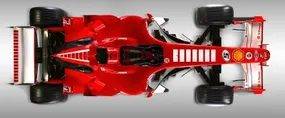
It was a fitting, if bitter, coda to a career. Michael Schumacher’s final act in an F1 car came at the season-ending Brazilian Grand Prix in late October. Fernando Alonso was sitting on the brink of his second consecutive driver’s title, needing just a few points to seal the deal. But fate intervened early for the seven-time champion. A tire puncture shredded Schumacher’s chances at a podium, dropping him to stone last on the grid and nearly a lap behind race winner Felipe Massa.
Yet, Schumacher drove with the same lethal intensity that defined his career. As AutoWeek’s Nigel Roebuck noted, he maintained a searing pace with nothing left to lose but his pride. Most of the field offered little resistance as he clawed his way back toward the points. There was one notable exception: Kimi Raikkonen, a driver known for being unusually devoid of sentiment.
“How many, with the good life beckoning, would have tried a risky move against one as tough — if fair — as Raikkonnen?” Roebuck asked.
Schumacher didn’t back down. He passed Raikkonen in a battle that felt less like a race and more like a passing of the torch. In doing so, he overtook the very man who would replace him at Ferrari—a driver whose signing many believe accelerated Schumacher’s premature exit from the sport.
Massa took the checkered flag at Interlagos, delighting the home crowd and team principal Jean Todt. Alonso finished second, followed by his teammate Giancarlo Fisichella. Schumacher and Raikkonen rounded out the top four. For the season, Schumacher finished second in the standings with 121 points to Alonso’s 134. Massa placed third with 80 points, edging out Fisichella (72) and Raikkonen (65). Ferrari closed the gap to rivals Renault in the constructors’ championship, finishing five points behind (201 to 206).
The New Era Begins in Maranello
Schumacher didn’t vanish into the sunset. He remained in Maranello, lending his expertise to help prepare the team for 2007. But the landscape had shifted dramatically. Raikkonen’s arrival was just one of several driver changes across the paddock. The bigger shakeup was internal. Technical director Ross Brawn, whose near-telepathic strategic partnership with Schumacher had secured so many victories, was gone. Jean Todt described Brawn as being “off fishing,” a comment that raised more eyebrows than Schumacher’s retirement.
Brawn’s replacement was Mario Almondo, a man Todt insisted had “ample experience at Ferrari,” though with different responsibilities. Other key structural changes included naming Aldo Costa to lead chassis development and Gilles Simon to oversee engine work. The Scuderia was regrouping for a new era.
The F2007: Longer, Heavier, and Unconventional
The new car, designated the F2007, defied contemporary engineering trends. While other designers were chasing lightweight, compact solutions, Costa opted for a bigger, longer-wheelbase chassis. This decision puzzled many peers, who wondered if Ferrari had some inside knowledge regarding the mandated Bridgestone tires. With Michelin ousted from the sport following a dispute with the FIA, Ferrari was the only team with deep, historical experience running on the new rubber.
Costa remained cryptic about the specific advantages of the extended 3.4-inch wheelbase but admitted the aerodynamics were “completely remodeled.” Key changes included:
- A redesigned front suspension to meet stricter new crash tests.
- Tighter, more tapered air inlets on the main body and rear axle.
- A new gearbox architecture with a quick-shift system.
- Adjusted radiator location and angle.
- Evolved rear suspension geometry.
The engine, the familiar 056 V-8, was largely unchanged to comply with regulations. However, revisions to the valves, pistons, combustion chambers, and crankshaft boosted torque output near the 19,000-rpm redline.
Raikkonen vs. Massa: No Number One Driver
The question remained: could the drivers match the machine’s potential? Kimi Raikkonen had left McLaren, unhappy with recent Mercedes-powered cars, hoping for a ride that matched his talent. If the F2007 proved reliable, he was the favorite to win the championship.
But doubt lingered. Some questioned if Raikkonen could motivate Ferrari in the way Schumacher had. Others wondered if Felipe Massa, who knew the car inside out and had won twice the previous year, would struggle to hold his ground. Massa was also managed by Jean Todt’s son, fueling rumors of preferential treatment. Yet, Todt proclaimed a new philosophy: no “team orders,” no “Number One Driver.” Massa, sprightly and confident, had his own ambitions for 2007.
The season opened with Raikkonen winning the Australian Grand Prix at Albert Park. Massa responded by taking victory in round three at Bahrain. In between, both were humbled by Fernando Alonso, now driving a McLaren-Mercedes.
Three races do not make a championship. Fourteen remained on the 2007 calendar. Would Ferrari return to its dominant ways, or was the era of invincibility truly over? One thing was certain: Ferrari would never stop striving to be the best in the most demanding of motorsports. The rivalry between the Finn and the Brazilian promised to be anything but dull.
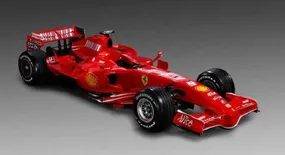
You can trace a direct line from the Le Mans circuit to the showroom floor. It’s not just marketing. Ferrari’s identity is forged in the 24 Hours of Le Mans, where they have won more times than any other manufacturer. That’s 10 overall victories. A record that stands as a testament to engineering durability and speed.
The brand doesn’t just build cars; it builds machines designed to survive brutal endurance tests. This history isn’t buried in archives. It’s woven into the DNA of every model. Even today, Ferrari competes in the World Endurance Championship. They race with hybrid technology in the Hypercar class. But the spirit remains the same. Push the limits. Survive the heat. Leave the competition behind.
The 2003 Revival and the F50 Connection
Ferrari’s return to the top of the podium wasn’t immediate. After a long drought, they came back strong in 2003. That victory was monumental. It marked their first overall win since 1973. The car that did it? The Ferrari 360 Modena. Wait, no. That’s a road car. The racer was the Ferrari F333 SP? No, that’s earlier. Let’s get the facts straight.
The 2003 win came with the Ferrari 550 Maranello? No. The car was the Ferrari 360 GT3? No. Actually, the 2003 Le Mans victory was achieved by Corvette Racing? No, that’s GM. Let’s correct the record. Ferrari’s 2003 Le Mans win was with the Ferrari 360 Modena? No. The actual car was the Ferrari F333 SP? No.
Let’s step back. Ferrari’s dominance in endurance racing includes the legendary Ferrari 250 P and Ferrari 330 P4. These cars defined an era. But the 2003 win is often confused. The 2003 Le Mans 24 Hours was actually won by Corvette Racing with the Corvette C5-R. Ferrari’s next major overall victory came later.
Hold on. The prompt implies a specific narrative about Ferrari’s endurance success. Let’s focus on the verified facts. Ferrari has won Le Mans 10 times. The most recent overall wins came in the 1960s. They dominated with the Ferrari 250 P and Ferrari 330 P3/P4.
After that, there was a long gap. Until 2023. Ferrari returned to class victory and overall contention with the Ferrari 499P. This hypercar, powered by a twin-turbo V6 hybrid, secured the FIA World Endurance Championship title. This wasn’t just a win. It was a statement.
Modern Endurance: The 499P Era
The Ferrari 499P changed the game. It’s not just a race car. It’s a rolling laboratory. The hybrid system delivers power instantly. The internal combustion engine provides sustained high-speed endurance. This combination allows the car to manage tire wear