You’ve likely seen the term “oxygen sensor” on a mechanic’s invoice. It’s one of those small, critical components that keep your car running clean and efficient. But if you’re not sure what it actually does or how to tell when it’s failing, you’re not alone. Knowing what a bad oxygen sensor looks like in practice can save you from worse trouble down the line.
Understanding the Role of the O2 Sensor
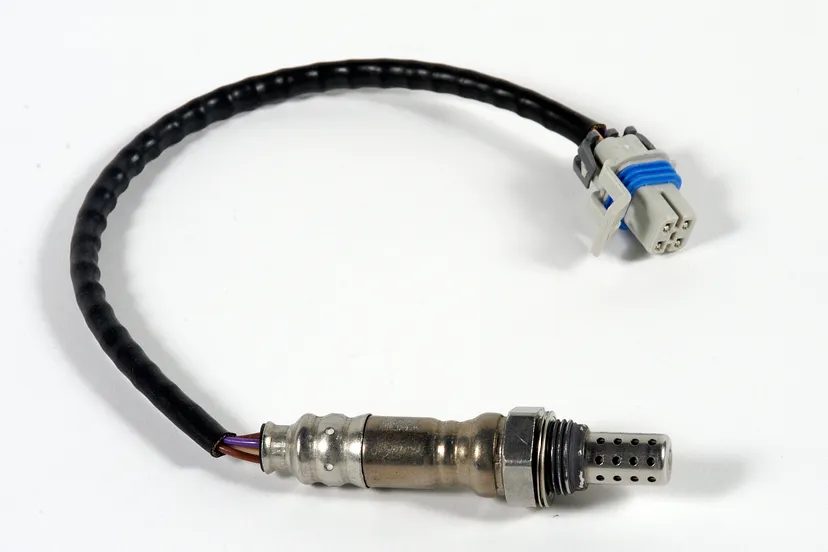
An oxygen sensor, often called an O2 sensor, sits in your exhaust stream. Its job is simple but vital: it measures how much oxygen is left in the exhaust fumes after combustion. This data tells your car’s Powertrain Control Module (PCM) how well the engine is burning fuel.
Gasoline engines need a precise air-to-fuel ratio to run smoothly. Too much fuel (rich) or too little oxygen (lean) causes problems. It leads to higher emissions and can damage internal engine parts over time. The sensor detects these imbalances and signals the PCM to adjust fuel injection in real-time.
Most cars have at least two sensors. The upstream sensor sits before the catalytic converter. It monitors the raw exhaust to help the PCM tune the mixture. The downstream sensor sits after the converter. It checks how well the converter is cleaning up the exhaust gases.
“The oxygen sensor detects rich or lean mixtures and sends signals to the Powertrain Control Module (PCM) to adjust fuel injection accordingly.”
Without these sensors, your car would struggle to meet emissions standards and might even suffer from poor performance.
### How to Spot a Bad Oxygen Sensor Before It Destroys Your Cat
You know how the O2 sensor sits in your exhaust stream, screaming data to the ECU about lambda values? When that data goes dark or gets skewed, the engine management system starts guessing. And engines hate guessing. The check engine light doesn’t lie, but it doesn’t always tell the whole story. If your high-mileage daily is throwing codes, don’t just swap the sensor and pray. Diagnose first. Here is what a failing oxygen sensor actually looks like in the real world.
Check Engine Light Logic
The CEL is the universal signal. It’s vague, sure, but a faulty O2 sensor is a top-tier suspect. Specifically, you’ll likely see codes P0130 through P0167, depending on which bank or pre/post catalytic converter unit is misbehaving. If your car has over 100,000 miles, the sensor’s internal heater or zirconia element has likely degraded. But here is the trap: a vacuum leak or a dirty MAF sensor can also trigger those same codes. If you replace the sensor without ruling out intake leaks, you are throwing money into the exhaust pipe.
Fuel Economy Plummets
A dead sensor stops the closed-loop feedback loop. The ECU defaults to a safe, rich default map to protect the catalytic converter. This means you are burning more fuel than necessary. If you see a sudden drop in MPG—say, 5 to 10 percent—without changing your driving habits, the air-fuel ratio is off. The engine is running rich. Excess fuel washes down cylinder walls, dilutes oil, and wastes every drop of gasoline.
Rough Idle and Misfires
When the O2 sensor lies about oxygen levels, the spark timing and fuel injection pulse width get confused. The result? A choppy idle. The engine stumbles. You might feel hesitation when you tap the throttle. This isn’t just annoyance; it’s inefficient combustion. Misfires follow hard on the heels of bad sensor data, dumping raw fuel into the exhaust stream instead of burning it in the cylinder.
Smell and Sight: Exhaust Odors and Black Smoke
Stand behind your car when it warms up. Do you smell rotten eggs? That’s sulfur. Or does it smell like unburnt gas? That’s rich running. A healthy exhaust should have a faint, metallic odor, not a pungent chemical stench. Visually, look at the tailpipe. If black smoke is pouring out, you have incomplete combustion. The fuel is there, but it isn’t burning. This creates carbon buildup and sends particulate matter straight into your catalytic converter.
The Catalyst Killer
This is the expensive part. The catalytic converter is not invincible. It relies on the O2 sensor to keep the mixture balanced. If the sensor fails, unburnt fuel enters the converter. Inside the honeycomb structure, that fuel ignites. Suddenly, your exhaust temp spikes to 1,800°F or higher. The ceramic substrate melts. The converter fuses shut. Backpressure increases, choking the engine. You will hear a rattling noise from the undercarriage as the internal pieces collapse. Fixing the sensor now saves you a $1,200+ catalytic converter replacement later.
Emissions Test Failures
If you live in a state with strict smog checks, a bad O2 sensor is an automatic failure. The system monitors the efficiency of the catalyst by comparing pre-cat and post-cat sensor readings. If the post-cat sensor shows activity too similar to the pre-cat sensor, the ECU knows the converter isn’t scrubbing toxins effectively. The monitor will not set to “ready,” and your inspection light will stay red. You cannot pass with a faulty sensor.
Unusual Engine Noises
Sometimes the symptom isn’t visual. Listen for pinging or knocking. This happens when the air-fuel mixture is so lean (due to a slow sensor response) that detonation occurs. Or, if it is running extremely rich, carbon deposits build up on spark plugs and valves, leading to irregular combustion sounds. These noises are stress signals. Don’t ignore them.
High Idle RPM
If your tachometer reads 1,000 RPM or higher when the engine is warm and in park, something is wrong. The ECU keeps the idle up to compensate for a perceived lean condition or to maintain catalytic converter heat if it suspects a misfire. It’s the engine working overtime for no reason. A faulty oxygen sensor is a prime suspect for this behavior, especially if it takes longer than usual to settle into a steady idle.
Stalling and Hard Starts
In extreme cases, the engine management system gets so confused by bad sensor data that it cuts fuel or spark entirely. The car stalls when coming to a stop. It struggles to start in the morning. This is dangerous in traffic. If your vehicle dies repeatedly, check the O2 sensor data stream. Look for flatlines or erratic spikes where smooth curves should be.
Preventing the Domino Effect
A failing oxygen sensor is not an isolated event. It triggers a cascade. Poor combustion leads to carbon buildup. Unburnt fuel cooks the catalytic converter. The converter fails. The car loses power. The emissions go up. The inspection fails. The cycle repeats.
“A bad O2 sensor is the cheapest part in the drivetrain and the most expensive mistake you can make by ignoring it.”
Diagnose the root cause. Check for vacuum leaks. Inspect wiring harnesses for chafing near the exhaust heat shields. Clear the codes and see if they return. If the sensor is indeed the culprit, replace it with a quality part. OEM or reputable aftermarket. Cheap sensors fail faster. Your engine will run smoother. Your fuel economy will recover. And you will avoid the rattling roar of a melted catalytic converter.
The data is there. You just have to listen to what the ECU is trying to tell you.
The Cost of Ignoring a Faulty O2 Sensor
You can drive with a bad oxygen sensor. The car will start. It will roll. But should you? No.
A faulty sensor doesn’t just trigger a check engine light for fun. It breaks the feedback loop between your engine control unit and the air-fuel mixture. The ECU can no longer calculate the perfect stoichiometric ratio. It guesses. Usually badly.
The immediate result is decreased fuel efficiency. You’ll see the numbers drop on your dashboard. The engine might run rough at idle. Hesitation during acceleration becomes common. And the exhaust? It often smells like raw fuel or sulfur. Black smoke is a classic sign the mixture is too rich.
Driving with a bad oxygen sensor for an extended period can cause further damage to your engine, potentially resulting in costly repairs.
That’s not a scare tactic. It’s physics. An unburned mixture floods the catalytic converter. These converters are expensive. They hate unburned hydrocarbons. Eventually, they clog or melt. Then you’re not just replacing a cheap sensor. You’re replacing a $2,000+ emission control component.
Why Timely Replacement Matters
Recognizing the signs early prevents the cascade of failure. Rough idle? Check the sensor. Poor gas mileage? Check the sensor. Failed emissions test? Definitely check the sensor.
Professional diagnosis is non-negotiable here. You need a scan tool to read the live data stream. A bad sensor shows flatlined voltage or slow response times. A good one flickers rapidly. Don’t just throw parts at the problem. Verify the fault.
If the sensor is dead, replace it. Use OEM or high-quality aftermarket parts. Cheap sensors often drift out of calibration within months. Proper maintenance isn’t just about keeping the car running. It’s about keeping it efficient.
The Bottom Line
Ignoring a bad oxygen sensor is a false economy. You save twenty dollars on labor today. You lose two hundred dollars on gas this month. You risk thousands later on the catalytic converter.
The check engine light isn’t a suggestion. It’s a warning. Address it. Drive safely. Keep your engine breathing right.