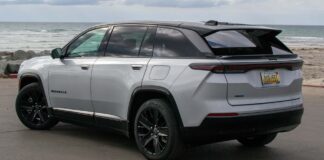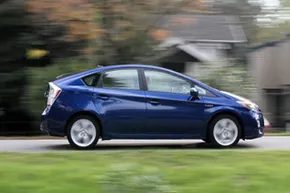
It happened quietly, buried under holiday shopping and New Year’s resolutions. By the time 2010 wound down, the federal government had largely shut the door on tax breaks for standard gas-electric hybrids. If you bought a Toyota Prius or a Honda Civic Hybrid in late 2010, you didn’t get a check from the IRS. The window closed. Starting in 2011, the only hybrids that qualified for federal income tax credits were the plug-in variety.
This wasn’t random policy drift. It was the result of a specific design in the Energy Policy Act of 2005. That law introduced tax credits for lessees and buyers of new hybrid vehicles for the first time. The goal was blunt: make energy-efficient cars competitive with their gas-guzzling counterparts. A tax credit directly reduces the amount of tax you owe. It is not a deduction. Deductions lower your taxable income. Credits lower your bill.
The credits kicked in January 2006. The maximum payout for most hybrids was $3,400. But there was a catch. A hard cap. Once a manufacturer sold 60,000 units of a specific hybrid model, the credits began to phase out. They didn’t stop immediately. They dwindled.
Think of the phase-out schedule like a dying battery.
If a manufacturer hit 60,000 sales by June 30 of a given year, buyers in the next quarter (ending September 30) got the full $3,400. That’s the sweet spot.
Buyers in the following two quarters (through March 31) got half the credit. $1,700.
Buyers in the two quarters after that got 25 percent. $850.
After that? Zero. The credit was gone.
Toyota hit that 60,000 mark early. Their hybrids phased out in 2007. Honda’s credits expired even faster, vanishing in early 2009. Ford reached the cap early in 2010.
As December 31, 2010, approached, the landscape was barren for standard hybrids. Only a few brands still had partial credits available. BMW. Cadillac. Chevrolet. GMC. Mercedes Benz. Nissan. Even then, the amounts were small. A list of qualifying vehicles remained on the Internal Revenue Service (IRS) Web site, but for most buyers, the money was long gone.
The political wind had shifted. With the end of the standard hybrid credits, attention turned sharply toward plug-in hybrids and full electric cars. The Federal Recovery and Reinvestment Act of 2009 had poured stimulus money into this new category. These buyers could get between $2,500 and $7,500 in federal tax credits. The bigger the battery, the bigger the check. There was even a $2,000 credit for trading in an old hybrid for a plug-in.
States joined the party. Many municipalities offered reduced license fees. Free parking. Rebates. The infrastructure for electrified driving was being built while the infrastructure for gas-electric hybrids was dismantling.
Not everyone thought this was a good move. Some analysts argued that the credits for gas-electric hybrids ended too soon. The argument was simple. Hybrids were no longer experimental. Prices had come down significantly as manufacturing scaled. Until plug-ins and electric cars became truly affordable and familiar to the average driver, keeping those hybrid credits alive might have made sense. It could have encouraged more people to buy efficient cars. It could have helped cut America’s dependence on imported oil.
But the phase-out happened. The money dried up. The focus moved to the next big thing.