It started in a French lab, not a Silicon Valley garage. Pierre Lefevre founded Induct in 2004, betting everything on a technology that most people thought was science fiction: driverless cars. The clock was ticking. By the very next year, his team had whipped up a prototype specifically built for the DARPA Grand Challenge in 2005. It was the first major race for autonomous vehicles, and they were in it.
They didn’t stop there. In 2007, Lefevre took a standard Renault Scenic, gutted the interior, and slapped on sensors and logic boards. That modified minivan ran the 2007 competition again. It was a proving ground. You didn’t just build the tech; you tested it under pressure.
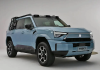
Then came the moment that actually put them on the map. In 2011, Induct unveiled the Navia. This wasn’t a concept car sitting in a showroom. It was the company’s first real, fully autonomous vehicle ready for deployment. A small, electric shuttle designed for closed campuses and controlled environments. It worked.
But Lefevre wasn’t interested in staying in France forever. After selling Induct, he didn’t retire. He moved to Greenwich, England, to lead various trials for autonomous shuttle operations. He was watching how these machines interacted with real pedestrians and traffic in a European setting.
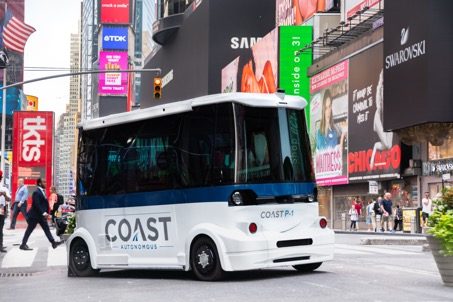
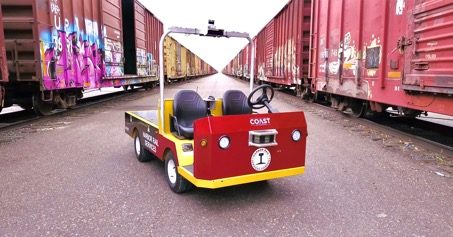
Realizing the market for local, collective mobility was shifting, he made a move to the US. In 2017, Lefevre established COAST Autonomous in Florida. This new venture focused on autonomous last-mile solutions. The goal? To produce fleets of self-driving shuttles, golf carts, and even utility vehicles that could navigate local routes without a human behind the wheel. The shift from a single prototype to a broader ecosystem of automated transport was complete.
Back in the mid-90s, I was driving through Paris and noticed something disturbing. My average speed? 10 km/h. That was the wake-up call. We had built cities for cars, not for people, a design flaw dating back to the 70s. Citroën and I were already talking about the future of the automobile, but the goal was clear: reduce the car’s footprint in urban centers. That quest led directly to the autonomous vehicle. The mission hasn’t changed. It’s always been about giving the city back to its residents.
“The only way for autonomous vehicles to work in Manhattan is to put New Yorkers behind fences so they don’t cross the streets.”
That quote from one of the Big Three American automakers is exactly what I’m fighting against. I want kids to play soccer on the street while people get transported. Not the other way around.
Will driverless cars ever blend in?
They won’t. Ever. Swapping every current car for a driverless version won’t fix traffic. It might make it worse.
We will see shared autonomous vehicles in cities. Small pods. Shuttles. Maybe something like a Segway for short hops. Robotaxis for airport runs? Sure. But for inter-city travel? We’ll likely be flying, not driving.
The blind spot problem: why cameras aren’t enough
Let’s be honest about the current state of machine vision. It’s good, but it’s not godlike. Modern autonomous vehicles rely heavily on cameras to parse traffic lights. They are excellent at this—until they aren’t.
Take Paris. It’s a maze of history, construction, and sheer chaotic density. A camera might have its line of sight blocked by a massive truck, a tree branch, or poor lighting conditions. The car sees nothing.
For a human driver, a blocked view triggers a guess. A conservative one. You slow down. You prepare to stop.
An autonomous system cannot afford ambiguity. It cannot “guess.” If the computer doesn’t see the red light, it doesn’t know the light is red. Ignoring a red signal isn’t an option. Safety protocols demand certainty, not probability.
This is where the infrastructure gap becomes a deal-breaker. To achieve true safety, the vehicle must bypass the camera entirely when it fails. It needs a direct line to the traffic signal itself.
V2I communication: talking to the street
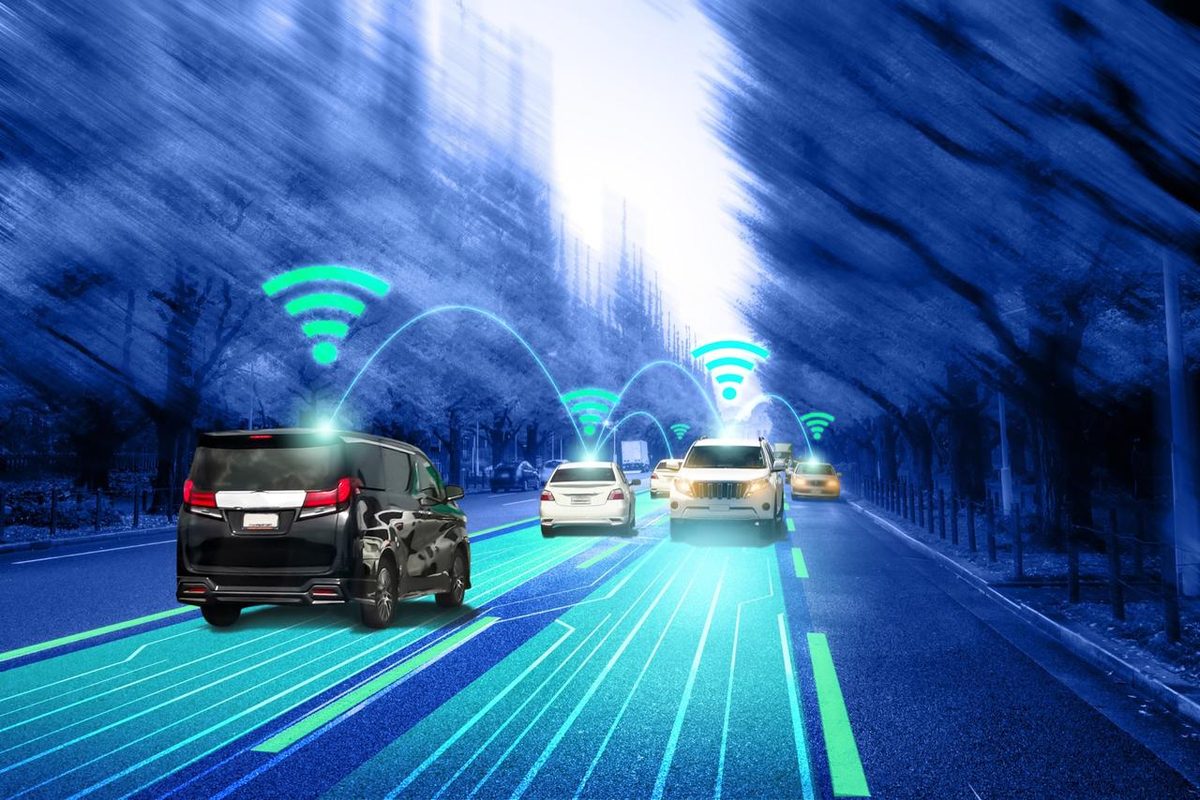
The solution lies in Vehicle-to-Infrastructure (V2I) communication. The car talks to the light.
There are two primary ways this happens today, and both have baggage.
The first is DSRC (Dedicated Short-Range Communications). This is an older standard, established by automakers over a decade ago. In the US, many traffic lights are already equipped with DSRC transponders. They broadcast their status—green, yellow, red—directly to compatible cars.
Think of it as a digital hand signal. The light waves its hand, and the car sees it, even if a truck is blocking the physical view.
The second is 5G. It’s faster, more ubiquitous, and the inevitable future. But right now, the rollout is uneven.
The “No Signal, No Go” rule
Here is the operational reality: if the car has a map that says there is a traffic light at coordinates X, but it cannot see it and cannot communicate with it, what does it do?
It stops.
It does not proceed.
This is a conservative safety heuristic. The system assumes the worst-case scenario. If the data link is broken, the vehicle treats the intersection as a potential hazard zone. It waits.
This creates a paradox for early adoption. For an autonomous vehicle to be more safe than a human, it needs more information. But if the infrastructure doesn’t provide that information, the car becomes immobilized.
“If we don’t see it, or if there is no connection with the infrastructure, we do not drive.”
The inevitable shift to 5G
DSRC works, but it’s a legacy protocol. It’s limited in bandwidth and range. It was designed for a simpler internet of things.
The automotive industry knows this. DSRC is a stepping stone, not the destination. As the network density increases and latency requirements drop, the industry will be forced to migrate to 5G.
Why? Because 5G offers the low-latency, high-reliability connection required for real-time coordination between thousands of vehicles and city lights simultaneously. DSRC handles one truck at a time. 5G can handle the entire city flow.
Until that infrastructure is
La transformation technologique ne se fait pas en un jour. Pensez à New York en 1902. Les rues sont bondées de chevaux. Les experts de l’époque jurent que la voiture n’est qu’une mode passagère et que les équidés resteront. Onze ans plus tard. La photo suivante montre une ville sans un seul cheval. Les routes ont été repensées. Le paradigme a basculé.
Pour le véhicule autonome, cette rupture disruptive, c’est la 5G.
Elle comble les angles morts des capteurs embarqués. C’est elle qui va véritablement faire décoller la technologie. Imaginez pouvoir “voir” avant d’arriver à un carrefour. Savoir ce qui se passe de l’autre côté du mur. Plus l’information arrive tôt, plus le freinage est précoce. Un vélo qui surgit à l’intersection ? Le véhicule doit le savoir. Tout ce qui traite et transmet ces données au véhicule est une aubaine.
L’impact réel sur la mobilité urbaine
Les véhicules autonomes ne vont pas seulement déplacer des gens. Ils vont redonner la ville aux habitants. Ils apportent de la liberté.
Le paradoxe est intéressant. Dans un campus, si vous installez des navettes autonomes, les gens marchent plus. Pourquoi ? Parce qu’ils savent qu’un véhicule est à un appel. Ils n’ont plus la contrainte du parking ou du timing rigide. Ils peuvent aller à pied, sachant qu’un retour est possible à tout moment.
Vitesse et confort : les limites du minibus
Nos navettes roulent lentement. En centre-ville, la vitesse est calculée en temps réel. L’accélération, positive ou négative, est optimisée pour le confort.
Prenons un exemple technique. Dans un minibus avec des passagers debout, une accélération de 1,5 mètre par seconde carrée suffit à perdre l’équilibre. Le système le sait. Il ne dépasse pas cette limite.
Le comportement du véhicule s’adapte au contexte :
– Zone piétonne ? Avancement lent.
– Trafic dense ? Suivi du flux.
– Voie dédiée ? La vitesse peut monter jusqu’à 60 km/h.
En cas de problème, le véhicule s’arrête. Un superviseur distant peut ensuite le redémarrer. La sécurité prime.
La route intelligente est-elle une illusion ?
Voir des routes connectées comme la Virginia Smart Road me laisse sceptique. Pourquoi ? Parce que les habitudes de conduite varient énormément d’un lieu à l’autre.
La façon de conduire en Floride n’a rien à voir avec celle en Californie. Les routes sont différentes. Les comportements aussi.
Je me souviens d’un voyage aux Philippines pour les Jeux d’Asie du Sud-Est. En tant que Français, je m’arrêtais au stop. J’étais le seul. Nul ne s’arrête là-bas. Pourtant, ce système est efficace. Peu de feux. Peu de signalisation. Peu de croisements. Les conducteurs avancent à vitesse réduite et s’insèrent dans la circulation.
Et puis il y a les règles sociales. Aux Philippines, certaines castes VIP roulent à contresens. Comment un véhicule autonome gère-t-il cela ? Comment peut-il s’adapter à un environnement où les règles non écrites priment sur la signalisation ?
Aux États-Unis, le problème est différent. Au Texas, les cerfs pullulent. À l’aube ou au crépuscule, il faut rouler doucement. Ils traversent les routes sans prévenir.
Une route intelligente supposerait d’uniformiser les mœurs. C’est irréalisable. Les règles changent d’un pays à l’autre.
Waymo et le dilemme de la prudence
Google, devenu Waymo, vise à remplacer les voitures existantes par des équivalents autonomes. Ils excellent en intelligence artificielle. Mais des problèmes persistent.
Waymo s’arrête souvent sur la base de perceptions non fondées. Ils jouent la prudence. On ne peut pas se permettre un accident.
Chez Coastautonomous, nous avons la même exigence. La première chose qu’un véhicule doit savoir faire, c’est s’arrêter. Dans toutes les circonstances où il le devrait. La sécurité n’est pas une option.
La 5G est-elle indispensable pour la connectivité automobile ?
Cisco prédit que l’essentiel des connexions 5G servira aux voitures. Je ne suis pas d’accord.
Pour plusieurs raisons techniques. Si les données captées par la voiture doivent transiter par le réseau, être traitées dans le Cloud, puis revenir au véhicule, c’est risqué. La sécurité est en jeu.
Un véhicule autonome doit traiter ses propres données. Au pire, il doit fonctionner sans connexion. C’est un robot indépendant. Il peut profiter des connexions environnantes pour le trafic ou les prévisions. Mais sans elles, il doit circuler.
Internet a aussi changé nos déplacements. Dans les années 70, la voiture était essentielle pour travailler, rencontrer des gens, créer des communautés. Puis sont apparus les centres commerciaux. La voiture est devenue incontournable.
Aujourd’hui, les livraisons sont assurées par les géants de la distribution. Les enfants reçoivent leurs produits en ligne. On se déplace pour les vacances. Mais on se déplacera moins pour le travail.
La voiture autonome n’est pas qu’un moyen de transport. Elle est le reflet d’une société qui change. Rapidement. Sans retour en arrière.
How V2V Communication Solves the Intersection Problem
Picture a four-way stop in the US. The rule is simple: first come, first served. If you’re human, you make eye contact. You wave. You negotiate right of way. But what happens when the driver in the next lane is an algorithm?
A fully autonomous vehicle won’t wave. It won’t nod. It will sit there, paralyzed by logic, waiting for a signal that never comes. If it didn’t arrive first, it has no authority to move. Period.
This is where the real value proposition of Vehicle-to-Vehicle (V2V) technology emerges. It isn’t just about avoiding collisions. It’s about establishing digital etiquette. Cars need to talk to each other to define priority at intersections, in merging zones, and in tight urban corridors. Without this communication layer, autonomous fleets will gridlock themselves.
The Necessity of a Digital Handshake
We have to get to a point where every car, regardless of brand or autonomy level, speaks the same language. This isn’t about luxury features. It’s about basic traffic flow.
Consider the scenario above. The autonomous car needs to know: Did someone else yield? Or better yet, Did they signal that they are yielding?
Today, we rely on physical cues. Headlights flashing. Horns blaring. Hand gestures. These are analog data points. An autonomous system needs digital confirmation. It needs a V2V message that says, “I am approaching the intersection at 30 mph. I will stop. You may proceed.”
Without this exchange, the autonomous vehicle remains conservative to the point of uselessness. It cannot take risks. It cannot navigate ambiguity. It waits. And while it waits, the traffic behind it builds up.
Why Universal Communication is Non-Negotiable
The advantage isn’t just efficiency. It’s safety through predictability. When cars communicate, they reduce the “unknowns” on the road.
- Priority Assignment: Who goes first? The V2V protocol decides, not human intuition.
- Collision Avoidance: Beyond radar and cameras, cars can see around corners by sharing sensor data.
- Traffic Optimization: Platooning becomes possible. Cars can travel closer together, reducing drag and congestion.
But none of this works if the network is fragmented. If one brand doesn’t talk to another, the system fails. We need a universal standard for these digital handshakes. Otherwise, we’re just building smarter cars that still get stuck at stop signs.
The Road Ahead
We are moving toward a world where the road is no longer just asphalt and paint. It’s a data stream. A conversation.
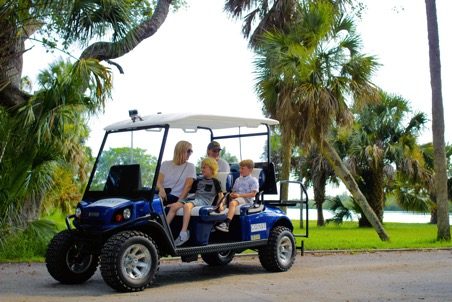
The autonomous shuttle you saw in the previous image? It’s just the beginning. The real revolution is in the invisible handshake between vehicles. It’s in the millisecond exchange of data that allows a car to know, with certainty, that it is safe to move.
Until then, we’ll have cars sitting at intersections, waiting for a wave that will never come.