Some car numbers are easy. Horsepower. Torque. Zero to sixty times. Even interior volume specs are straightforward if you know what to look for. These figures tell you exactly what you’re getting for your money.
Then there are the numbers that trip up new buyers. The ones that hide in the manual and get ignored until disaster strikes.
Gross Combination Weight Rating (GCWR) is one of those numbers.
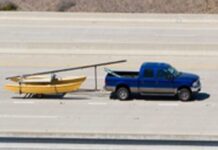
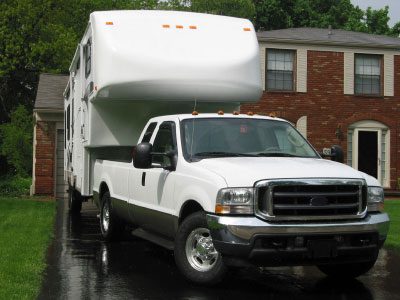
It’s not the same as your towing capacity. It’s not the same as your Gross Vehicle Weight Rating (GVWR). If you plan to pull a trailer—any trailer—you need to understand GCWR. Ignore it, and you risk blowing a tire, melting your brakes, or snapping an axle.
GCWR Definition: The Hard Limit
GCWR is the maximum total weight the manufacturer allows for your tow vehicle plus the loaded trailer.
It’s a hard ceiling. Not a suggestion.
Think of it this way. Your vehicle has limits. Your trailer has limits. When you hook them together, the combined weight cannot exceed the GCWR listed in your specs.
“The total weight of the tow vehicle and trailer should never exceed the manufacturer’s listed GCWR.”
Ford breaks down the math clearly. Your GCWR is calculated by adding:
* Curb weight of the vehicle
* Allowable payload
* Weight of the driver and passengers
* Weight of the trailer
This isn’t a measurement of your current weight. It’s the maximum limit. If you exceed it, you’re in the danger zone.
Why GCWR Exists: Safety, Not Just Specs
Manufacturers set GCWR for one reason: safety.
Overloading a trailer is bad. Overloading your tow vehicle is bad. Doing both at once is a recipe for failure.
Here’s what happens when you ignore the limits.
Brakes overheat. They fade. You lose the ability to stop. Tires blow out under the strain. Engines and transmissions cook from excessive heat and stress. Suspension components bend or break. You lose control.
The list of potential failures is long. The consequence is often the same: a crash.
You need to know your vehicle’s GCWR before you buy a trailer. Before you load it. Before you hit the highway.
Where to Find Your GCWR
Don’t guess. Look it up.
The most reliable spot is the sticker inside your driver’s side door jamb. That’s where the manufacturer puts the hard limits.
If you can’t find the sticker, check online. Most makers publish this data on their official sites.
Below is a snapshot of GCWR data for Acura and Audi. Note that many luxury models have no GCWR listed because they aren’t designed to tow.
Acura GCWR Specs (2006–2009)
| Year | Model | GCWR (lbs) |
|---|---|---|
| 2006 | MDX | 8,121 |
| 2006 | RL | 5,162 |
| 2006 | RSX | 4,384 |
| 2006 | TL | 4,730 |
| 2006 | TSX | – |
| 2007 | MDX | 10,053 |
| 2007 | RL | 5,164 |
| 2007 | RDX | 6,394 |
| 2007 | TL | 4,773 |
| 2007 | TSX | 4,407 |
| 2008 | MDX | 10,053 |
| 2008 | RL | 5,164 |
| 2008 | RSX | 6,394 |
| 2008 | TL | 4,773 |
| 2008 | TSX | 4,407 |
| 2009 | MDX | 10,053 |
| 2009 | RL | 5,233 |
| 2009 | RSX | 5,574 |
| 2009 | TSX | 4,550 |
Acura models marked with a dash (-) do not have a published GCWR or are not rated for towing.
Audi GCWR Specs (2006–2009)
| Year | Model | GCWR (lbs) |
|---|---|---|
| 2006 | Q7 | 10,665 |
| 2006 | All others | – |
| 2007 | Q7 | 10,665 |
| 2007 | All others | – |
| 2008 | Q7 | 10,665 |
| 2008 | All others | – |
| 2009 | Q7 | 10,665 |
| 2009 | R8, S4, S5, S8, TT | – |
| 2009 | All others | – |
Note: Many Audi sedans and coupes lack GCWR ratings. Only the Q7 shows a consistent rating in this dataset.
The Bottom Line
Towing isn’t just about engine power. It’s about weight management.
Your tow capacity tells you how much the hitch can handle. Your GVWR tells you how much the vehicle itself can carry. Your GCWR tells you how heavy the entire rig can be.
Miss the GCWR, and everything else becomes irrelevant.
You’re driving a death trap.
Check your door jamb. Know your limits. Don’t get cute with the math.
BMW Gross Combination Weight Rating
If you are towing something with a BMW from the mid-2000s, the numbers matter more than the badge. Gross Combination Weight Rating (GCWR) isn’t just towing capacity. It is the total weight of the vehicle plus cargo, passengers, and whatever you have hitched to it. Exceed this, and you are playing with suspension geometry and brake fade.
For the E46 and E60 platforms, BMW kept it simple. Sedans and coupes? Most lacked published GCWR data for 2006 through 2009. The 328i, 335i, 528i, 535i, 550i, 650i, and even the high-performance M3, M5, and M6 did not have official ratings listed in standard catalogs for those years. You were likely towing by way of “good luck and strong axles.” The Z4, including the M Roadster, fell into the same category. No number. Just speculation.
The SUVs were the real workhorses. The E83 X3 held steady around 7,662 to 7,673 lbs depending on the model year. It could handle a small trailer or a motorcycle carrier, but it wasn’t built for a full-size camper. The E53 X5 was another story. Starting at 10,802 lbs in 2006, it climbed to 11,132 lbs by 2007 and 2008, then dipped slightly to 11,066 lbs in 2009. Those figures allowed for substantial loads.
Buick GCWR
Buick in this era was all about volume. The LaCrosse and Lucerne were luxury cruisers with a strict GCWR of 4,645 and 4,914 lbs respectively. You are not pulling a boat with a Lucerne. The Rainier and Rendezvous SUVs pushed higher, hitting 10,500 and 7,746 lbs. The Terraza added another tier at 8,500 lbs.
When the Enclave dropped in 2008, it brought the house. 9,500 lbs was the limit for the LaCrosse, but the Enclave could haul significantly more. The numbers stayed flat through 2009. Buick wasn’t trying to compete with the heavy haulers of Detroit. They were trying to keep family road trips comfortable.
Cadillac GCWR
Cadillac drew a line in the sand between luxury and utility. The CTS sat at 4,659 lbs in 2006 and 2007. By 2008 and 2009, that bumped to 5,011 lbs. The DTS hovered around 5,159 lbs. The STS and STS-V were slightly higher, reaching 5,383 and 5,544 lbs at their peaks. These were executive sedans. The GCWR limits meant you could pull a small utility trailer, but nothing that tested the brakes hard.
The Escalade family was the heavy hitter. In 2006, the standard Escalade sat at 12,902 lbs. The ESV extended version jumped to 14,000 lbs. The EXT pickup followed suit at 13,464 lbs. From 2007 through 2009, the Escalade, ESV, and EXT all stabilized at 14,000 lbs. That is serious capacity. It handled heavy campers or large boat setups without breaking a sweat. The Escalade Hybrid arrived in 2009 with a lower rating of 6,314 lbs, a trade-off for efficiency. The SRX and STS-V variants also saw adjustments, with the SRX holding 6,314 lbs after an initial dip. The XLR models had no published rating, likely due to their low-slung, grand-touring nature.
Chevrolet GCWR
Chevrolet covered the entire spectrum. From the Aveo to the Silverado 3500, there was a number for everyone. The small cars like the Cobalt were limited to 4,141 lbs. The Malibu, Impala, and Monte Carlo sat in the 4,400 to 4,700 lb range. The HHR added a bit of utility at 4,305 lbs.
The mid-size SUVs and trucks told the real story. The Colorado started at 5,218 lbs in 2006, climbed to 5,772 in 2007, and hit 7,000 lbs by 2008 and 2009. The Equinox held a steady 7,252 lbs. The Express vans were workhorses, sitting at 9,500 lbs for many years, then climbing to 11,788 and 12,000 lbs for the heavier 3500 models in 2009.
The trucks were the kings of the lot. The Silverado 1500 varied wildly. It started at 10,839 lbs in 2006, dipped to 10,000 lbs in 2007, and stayed there. The HD versions of the 2500 and 3500 models maxed out at 16,000 lbs from 2006 through 2009. The Suburban 2500 and Tahoe 1500/2500 models pushed boundaries, with the 2500 series hitting 16,000 lbs by 2008. The Avalanche 1500 struggled a bit in 2009, dropping to 11,000 lbs after starting at 12,863 lbs in 2006. The Silverado 1500 Hybrid and Tahoe Hybrid both offered 12,000 lbs, bridging the gap between efficiency and capability.
Chrysler GCWR
Chrysler struggled with consistency in the mid-2000s. The PT Cruiser was a rollercoaster. It started at 8,132 lbs in 2006, dropped to 4,297 in 2007, then jumped to 7,105 in 2008 before settling back at 4,297 in 2009. The 300 series remained stable around 4,862 to 6,196 lbs. The Town & Country minivan held a solid 6,600 lbs until 2008, when it bumped to 7,000 lbs.
The Aspen SUV was the heavy lifter. It started at 11,000 lbs in 2007, jumped to 13,966 in 2008, then settled back at 11,000 lbs in 2009. The Aspen Hybrid pushed that to 11,700 lbs. The Pacifica minivan also saw growth, moving from 4,297 to 7,105 and finally 4,297 lbs again, though the 2009 Sebring dropped slightly to 4,460 lbs. Chrysler was consolidating platforms, which explains the shifting numbers.
Dodge GCWR
Dodge played a different game. The Ram trucks were the headline act. The Ram 1500 started at 8,000 lbs and climbed to 8,500 lbs by 2009. The Ram 2500 held steady at 15,000 lbs. The Ram 3500 was the beast, starting at 17,000 lbs and jumping to 19,000 lbs in 2009. These numbers meant heavy hauling was not just possible, it was expected.
The Sprinter vans were also impressive. The 2500 models held at 13,550 lbs. The 3500 models climbed from 13,550 to 14,110, and then 15,250 lbs by 2008 and 2009. The Wagon variants were lighter, hovering between 10,626 and 14,990 lbs depending on the year.
The consumer cars were more modest. The Charger, Challenger, and Magnum sat in the 4,800 to 5,900 lb range. The Durango held steady at 8,600 lbs, with the Hybrid version hitting 11,700 lbs. The Dakota, Grand Caravan, and Nitro were all in the 7,000 to 8,600 lb range. The Viper had no rating, which makes sense for a two-seat sports car. You don’t tow a Viper. You tow whatever you can carry without stressing the chassis.
Final Thoughts
These numbers are not suggestions. They are hard limits. When you look at the GCWR of a
2006 Ford, GMC, Honda, and Hummer GCWR specs
The 2006 lineup was a mess of half-measures and heavy iron. Ford’s 2006 Ford GCWR data shows the Crown Victoria sitting at a meager 5,592 lbs. Why anyone bought a sedan for towing that year is a mystery. The E-series vans told a different story. The E-150 pulled 11,318 lbs. The E-350 Super Duty pushed to 13,000 lbs. The F-250 and F-350? Both maxed out at 15,000 lbs. That’s barely enough to haul a house trailer and a regret.
GMC started strong in 2006. The Sierra 2500 and 3500 both hit 15,792 lbs. The Yukon XL cleared 13,000 lbs. The Canyon? 5,179 lbs. Not a lot of room for cargo if you’re using the full GCWR. Honda’s 2006 data is sparse on the small stuff. The Civic hit 4,968 lbs. The Odyssey sat at 8,210 lbs. The Ridgeline did 9,653 lbs. Hummer didn’t mess around. The H1 Alpha cleared 17,300 lbs. The H2 did 13,050 lbs. The H3? 8,000 lbs. Solid.
2007 updates and the rise of the crossover
By 2007, Ford added the Edge. GCWR of 6,248 lbs. It wasn’t built for heavy hauling. The Expedition EL finally broke 15,000 lbs at 15,078 lbs. The F-250 and F-350 both jumped to 17,000 lbs. A nice bump. The Mustang got a number this year. 4,611 lbs. Don’t try to tow anything with that. The Ranger dropped to 5,820 lbs.
GMC’s 2007 Sierra 2500 did 15,858 lbs. The Sierra 3500 actually dropped slightly to 15,342 lbs. Weird. The Yukon XL stayed at 13,000 lbs. Honda’s Ridgeline climbed to 10,085 lbs. The Pilot hit 9,700 lbs. The Civic Hybrid did 3,736 lbs. Hummer’s H2 went up to 13,150 lbs. The H3T didn’t exist yet. Still 8,000 lbs for the H3.
2008 Ford, GMC, Honda, and Hummer specifications
Ford’s 2008 F-350 hit 17,000 lbs. The F-450? 27,000 lbs. That’s a serious number. The Explorer Sport Trac dropped to 8,500 lbs. The Taurus X did 6,183 lbs. The Mustang stayed at 4,611 lbs. The Ranger climbed to 6,000 lbs.
GMC’s Sierra 3500 finally hit 16,000 lbs. The Sierra 2500 did 15,858 lbs. The Yukon Hybrid did 12,000 lbs. The Acadia did 9,500 lbs. Honda’s Ridgeline stayed at 10,085 lbs. The Pilot did 9,700 lbs. The Civic Hybrid did 3,736 lbs. Hummer’s H2 jumped to 14,000 lbs. The H3T arrived at 9,461 lbs. The H3 stayed at 8,000 lbs.
2009 Ford, GMC, Honda, and Hummer specs
Ford’s 2009 F-150 did 14,950 lbs. The F-450 dropped to 16,983 lbs. The Flex did 6,900 lbs. The Explorer dropped to 8,110 lbs. The Ranger stayed at 6,000 lbs. The Mustang stayed at 4,611 lbs.
GMC’s Sierra 2500 did 15,926 lbs. The Sierra 3500 did 16,000 lbs. The Yukon XL dropped to 11,000 lbs. The Yukon did 10,000 lbs. The Yukon Hybrid did 12,000 lbs. Honda’s Pilot dropped to 8,466 lbs. The Odyssey did 8,210 lbs. The Civic did 3,738 lbs. Hummer’s H2 did 14,000 lbs. The H3T did 9,461 lbs. The H3 did 8,000 lbs.
Hyundai, Infiniti, Isuzu, and Jaguar 2006-2009 GCWR data
Hyundai’s 2006 Azera did 4,779 lbs. The Elantra did 4,434 lbs. The Santa Fe did 6,399 lbs. The Sonata did 4,403 lbs. The Tucson did 4,403 lbs. The 2007 Elantra dropped to 3,623 lbs. The Entourage did 5,550 lbs. The Santa Fe dropped to 5,527 lbs. The Tucson did 4,390 lbs. The 2008 Accent did 4,779 lbs. The Azera did 3,623 lbs. The Elantra did 5,550 lbs. The Entourage did 5,898 lbs. The Santa Fe did 5,527 lbs. The Sonata did 4,403 lbs. The Tucson did 4,390 lbs. The 2009 Accent did nothing. The Azera did 4,779 lbs. The Sonata did 4,442 lbs.
Infiniti’s 2006 FX35 did 7,760 lbs. The FX45 did 8,020 lbs. The G35 did 4,655 lbs. The M35 did 4,982 lbs. The M45 did 5,098 lbs. The QX56 did 14,510 lbs. The 2007 FX45 jumped to 14,520 lbs. The G35 jumped to 9,155 lbs. The M35 jumped to 12,982 lbs. The QX56 jumped to 15,558 lbs. The 2008 EX35 did 12,902 lbs. The G35 did 9,647 lbs. The G37 did 13,266 lbs. The 2009 FX50 did 9,109 lbs. The QX56 did 15,100 lbs.
Isuzu’s 2006 Ascender did 10,000 lbs. The i-280 did 5,500 lbs. The i-350 did 9,000 lbs. The 2007 Ascender did 10,000 lbs. The i-290 did 5,500 lbs. The i-370 did 9,000 lbs. The 2008 Ascender did 10,000 lbs. The i-290 did 6,000 lbs. The i-370 did 9,500 lbs.
Jaguar’s 2006 S-Type did nothing. The X-Type did nothing. The XJ8 did nothing. The XJR did nothing. The XK8 did nothing. The XKR did nothing. The 2007 S-Type did nothing. The X-Type did nothing. The XJ8 did nothing. The XJR did nothing. The XK did nothing. The XKR did nothing. The 2008 S-Type did nothing. The X-Type did nothing. The XJ8 did nothing. The XJR did nothing. The XK did nothing. The XKR did nothing. The 2009 XF did nothing. The XJ8 did nothing. The XKR did nothing. The XK Coupe did nothing.
Jeep 2006-2009 GCWR specs
Jeep’s 2006 Commander did 8,231 lbs. The Grand Cherokee did 8,000 lbs. The Liberty did 8,500 lbs. The Wrangler did 5,350 lbs. The 2007 Commander did 8,299 lbs. The Compass did 4,221 lbs. The Grand Cherokee did 8,000 lbs. The Liberty did 8,
Understanding GCWR Limits Across Domestic and Import Brands
When you are planning a heavy tow or a fully loaded road trip, Gross Combined Weight Rating (GCWR) is the number that keeps you on the road and out of jail. It is not the same as towing capacity. GCWR includes the vehicle, passengers, cargo, fuel, and the trailer plus its contents. If you exceed it, you are stressing brakes, transmission cooling, and suspension components beyond their design limits.
For many of these brands, the data from 2006 to 2009 shows a clear divide. Luxury SUVs and trucks carry significantly higher limits than crossovers or sedans. If you are looking for 2006-2009 vehicle GCWR limits, the spread is massive. You have compact cars sitting below 5,000 lbs and full-size luxury haulers pushing past 14,000 lbs.
Kia Spec Breakdown
Kia’s lineup during this era was small. They did not have massive tow vehicles. The Sorento and Sedona were the workhorses.
| Year | Model | GCWR (lbs) |
|---|---|---|
| 2006 | Sportage | 4,880 |
| 2007 | Sedona | 8,015 |
| 2007 | Sorento | 9,299 |
| 2007 | Sportage | 4,880 |
| 2008 | Sorento | 9,299 |
| 2008 | Sportage | 4,880 |
| 2009 | Borrego | 9,398 |
| 2009 | Optima | 5,292 |
Notice the Optima. It is listed with a GCWR in 2006, 2007, and 2008. This suggests Kia engineered it to handle a light trailer or small cargo load. The Borrego, launching in 2009, jumps to nearly 9,400 lbs. That is serious capability for a mid-size SUV of that generation. The Sportage stayed static at 4,880 lbs. It was not built for heavy loads.
Land Rover Capability
Land Rover sat at the top of the food chain here. The Range Rover and LR3 platforms were built for utility. They are heavy themselves, so their GCWRs reflect that mass.
| Year | Model | GCWR (lbs) |
|---|---|---|
| 2006 | LR3 | 13,165 |
| 2006 | Range Rover | 13,324 |
| 2006 | Range Rover Sport | 13,318 |
| 2007 | LR3 | 13,276 |
| 2007 | Range Rover | 13,324 |
| 2007 | Range Rover Sport | 13,334 |
| 2008 | Range Rover Sport | 13,334 |
| 2009 | LR2 | 7,905 |
| 2009 | LR3 | 13,662 |
| 2009 | Range Rover | 13,564 |
| 2009 | Range Rover Sport | 13,334 |
The LR2 is an outlier. It is much smaller. Its GCWR of 7,905 lbs in 2009 is less than half of the LR3. If you are towing with a Range Rover Sport, you have a consistent limit around 13,300 lbs. The LR3 gained a bit of capacity over its life, hitting 13,662 lbs by 2009. This matters if you are towing a large camper or heavy equipment.
Lexus Luxury and Towing
Lexus had a few heavy hitters. The LX 570 and GX 470 are body-on-frame trucks disguised as SUVs. They carry huge GCWRs. The RX series is unibody. It is lighter. The numbers tell that story.
| Year | Model | GCWR (lbs) |
|---|---|---|
| 2006 | GX 470 | 11,521 |
| 2006 | LS 430 | 6,140 |
| 2006 | LX 470 | 12,240 |
| 2006 | RX 330 | 7,510 |
| 2006 | RX 400h | 8,015 |
| 2007 | GX 470 | 11,521 |
| 2007 | LX 470 | 12,240 |
| 2007 | RX 350 | 7,520 |
| 2007 | RX 400h | 8,015 |
| 2008 | GX 470 | 11,521 |
| 2008 | LX 570 | 14,645 |
| 2008 | RX 350 | 6,020 |
| 2008 | RX 400h | 6,340 |
| 2009 | GX 470 | 11,521 |
| 2009 | LX 570 | 14,645 |
| 2009 | RX 350 | 6,020 |
The jump from the LX 470 to the LX 570 is significant. The newer platform pushed the limit to 14,645 lbs. That is impressive. The RX hybrids (400h) actually had higher GCWRs than the non-hybrid RX 330/350 in some years. Why? Hybrid systems often have different cooling and transmission tuning that allows for slightly higher sustained loads, or perhaps the battery pack adds rear weight bias that helps traction. The LS 430 at 6,140 lbs is barely above a mid-size sedan. It is not a tow vehicle.
Lincoln’s Heavy Duty Focus
Lincoln was riding the Ford platform wave. The Navigator and Mark LT share DNA with the Expedition and F-150. They are big. They can pull big.
| Year | Model | GCWR (lbs) |
|---|---|---|
| 2006 | Mark LT | 14,500 |
| 2006 | Navigator | 11,900 |
| 2006 | Town Car | 6,460 |
| 2007 | MKX | 6,370 |
| 2007 | Mark LT | 14,500 |
| 2007 | Navigator | 15,000 |
| 2007 | Town Car | 6,460 |
| 2008 | MKX | 7,350 |
| 2008 | Mark LT | 14,500 |
| 2008 | Navigator | 15,000 |
| 2008 | Town Car | 6,502 |
| 2009 | MKS | 5,277 |
| 2009 | MKX | 7,350 |
| 2009 | Navigator | 15,000 |
| 2009 | Town Car | 6,502 |
The Navigator hit 15,000 lbs in 2007 and held it. That is a solid number for a full-size luxury SUV. The Mark LT, being a pickup, stayed at 14,500 lbs. The MKX grew into its role, moving from 6,370 to 7,350 lbs. The Town Car remained largely unchanged, hovering around 6,500 lbs.
Mazda’s Diverse Fleet
Mazda offered a lot here. You had the B-series trucks, the Tribute, the CX-9, and the RX-8. The RX-8 and Mazda3 often have no GCWR listed, meaning they are not rated for towing.
| Year | Model | GCWR (lbs) |
|---|---|---|
| 2006 |
Nissan GCWR
Nissan’s lineup from the mid-2000s shows a clear split between their passenger cars and their heavy-duty trucks. If you are looking at the 2006 models, the Armada and Titan are the heavy hitters. The Armada sits at 11,818 lbs, while the Titan pushes to 11,465 lbs. The Frontier follows at 10,676 lbs. The Pathfinder is lighter at 10,523 lbs. The Xterra holds 9,658 lbs. Mid-size SUVs like the Murano cap at 8,100 lbs. The Quest minivan is at 7,662 lbs.
The cars are much lighter on the scale. The Maxima starts at 4,623 lbs. The Altima is just under, at 4,151 lbs. The Sentra is surprisingly light at 3,663 lbs. The 350Z has no listed towing capacity.
By 2007, Nissan adjusted some numbers. The Armada jumped to 12,800 lbs. The Frontier climbed to 11,133 lbs. The Titan reached 11,600 lbs. The new Altima Hybrid showed a higher GCWR than the standard V6, hitting 4,632 lbs versus 4,205 lbs. The Sentra got a lift too, up to 4,003 lbs. The Versa had no data.
The 2008 model year brought significant changes to the heavy end. The Armada jumped again, this time to 15,100 lbs. That is a massive increase from the previous year. The Titan edged up to 11,688 lbs. The new Rogue entry-level SUV sat at 4,430 lbs. The Pathfinder dipped slightly to 10,596 lbs. The Xterra dropped to 9,300 lbs. The Sentra moved to 4,047 lbs.
2009 saw the Murano drop significantly to 7,505 lbs. The Armada held steady at 15,100 lbs. The Frontier returned to 11,133 lbs. The Titan stayed at 11,688 lbs. The Altima and Altima Hybrid saw minor fluctuations, sitting at 4,217 lbs and 4,620 lbs respectively. The GT-R and Versa still had no towing capacity listed.
For deeper specs on these trucks, check the Nissan GVWR and Nissan GAWR data. You might also need the Nissan Cargo Carrying Capacity or Nissan Payload figures to plan your load accurately.
Pontiac GCWR
Pontiac’s final years saw a mix of muscle cars and practical SUVs. The GTO and Grand Prix dominated the sedan numbers in 2006. The Grand Prix sat at 4,634 lbs. The GTO was close at 4,578 lbs. The G6 was similar at 4,530 lbs. The Vibe wagon was light at 4,351 lbs. The Montana SV6 and Torrent handled the heavier loads. The Montana reached 8,500 lbs. The Torrent was at 7,310 lbs. The Solstice had no capacity.
The 2007 models kept most numbers steady. The G5 entered the frame at 4,141 lbs. The Grand Prix dropped slightly to 4,627 lbs. The Torrent moved up to 7,407 lbs. The Vibe stayed at 4,351 lbs. The G6 held at 4,530 lbs.
2008 brought the G8. This large sedan brought a substantial GCWR of 6,035 lbs. The G6 dropped to 4,455 lbs. The Grand Prix remained at 4,627 lbs. The Torrent returned to 7,310 lbs. The Vibe dipped to 4,350 lbs. The G5 held at 4,141 lbs. The Solstice still had no rating.
2009 saw the G5 drop to 3,902 lbs. The G6 stayed at 4,455 lbs. The G8 held at 6,035 lbs. The Torrent stayed at 7,310 lbs. The Vise increased to 4,506 lbs. The Solstice remained unrated.
Look at Pontiac GVWR and Pontiac GAWR for axle limits. The Pontiac Payload and Pontiac Cargo Carrying Capacity specs will help you weight your gear correctly.
Porsche GCWR
Porsche kept things simple. The 911, Boxster, and Cayman sports cars had no towing capacity. They were built for the road, not the trailer hitch. The Cayenne, however, was built for utility.
In 2006, the Cayenne sat at 12,628 lbs. The numbers did not change in 2008. The 911 and Boxster still had no rating. The Cayenne remained at 12,628 lbs. The Cayman had no rating.
2009 brought a slight increase. The Cayenne moved to 12,650 lbs. The 911 Carrera and Boxster still had no towing capacity. The Cayman remained unrated.
Check the Porsche GVWR and Porsche GAWR for structural limits. The Porsche Payload and Porsche Cargo Carrying Capacity specs are essential if you are hauling anything heavier than a weekend bag.
Saab GCWR
Saab’s lineup was small but consistent. The 9-2X was based on the Impreza, sharing its modest towing limits. In 2006, the 9-2X sat at 5,220 lbs. The 9-3 was slightly higher at 5,430 lbs. The large 9-5 sedan sat at 7,120 lbs. The 9-7X, built on the GMT820 platform with the Trailblazer, handled the heavy load at 10,500 lbs.
The 2007 models kept most numbers stable. The 9-3 dropped slightly to 5,380 lbs. The 9-5 held at 7,120 lbs. The 9-7X stayed at 10,500 lbs. The 9-2X was no longer listed.
2008 saw no change. The 9-3 held at 5,380 lbs. The 9-5 remained at 7,120 lbs. The 9-7X stayed at 10,500 lbs.
2009 brought a small bump to the 9-3, up to 5,680 lbs. The 9-5 held at 7,120 lbs. The 9-7X stayed at 10,500 lbs.
Review the Saab GVWR and Saab GAWR for weight distribution. The Saab Payload and Saab Cargo Carrying Capacity figures are critical for avoiding suspension sag.
Saturn GCWR
Saturn’s final years were a mix of small cars and larger SUVs. The 2006 Ion was light at 3,946 lbs. The Relay minivan was heavy at 8,500 lbs. The VUE sat at 4,857 lbs.
2007 added the Aura and Outlook. The Aura started at 4,678 lbs. The Ion dropped to 3,902 lbs. The Outlook was a heavy hauler at 9,500 lbs. The Relay dropped to 7,918 lbs. The VUE and VUE Hybrid both sat at 4,857 lbs. The Sky had no rating.
2008 saw the Sky and Astra enter with no towing capacity. The Outlook dropped significantly to 6,872 lbs. The VUE increased to 5,475 lbs. The VUE Hybrid held at 5,439 lbs. The Aura stayed at 4,678 lbs. The Astra had no rating.
2009 kept the same pattern. The Outlook dipped slightly to 6,852 lbs. The VUE held at 5,475 lbs. The VUE Hybrid stayed at 5,439 lbs. The Aura remained at 4,678 lbs. The Sky and Astra still had no towing capacity.
Check the Saturn GVWR and Saturn GAWR for axle limits. The Saturn Payload and Saturn Cargo Carrying Capacity specs will help you plan your load.
Scion GCWR
Scion’s early models were all small, sporty cars. The tC, xA, and xB had no towing capacity. They were not built for trailers.
Volkswagen Gross Combined Weight Rating by Model
The German engineering in VWs is solid, but towing requires math, not just vibes. If you are hauling a trailer behind a 2006-2009 Volkswagen, you need to know the limits. Most sedans and compacts in this era have no official GCWR listed. They are not built for heavy towing. The data is sparse for the Jetta, Golf, Beetle, and Passat sedans. You will see dashes where the numbers should be.
This usually means the manufacturer does not endorse towing with these specific configurations or the data was never published for those trim levels. Do not guess.
The Touareg is the exception. It is a full-size SUV with a heavy-duty frame.
Here is the breakdown for the years when GCWR was published:
2006 Models
– Touareg: 12,952 lbs
– All other models (Golf, GTI, Jetta, Beetle, Passat, Phaeton, Rabbit): Not listed
2007 Models
– Touareg: 13,034 lbs
– Eos, GTI, Jetta, Beetle Convertible/Coupe, Passat Sedan/Wagon, Rabbit: Not listed
2008 Models
– Touareg 2: Not listed in this specific dataset (likely similar to prior years but unlisted here)
– Eos, GLI, GTI, Jetta, Beetle, Passat, R32, Rabbit: Not listed
2009 Models
– Touareg 2: 12,952 lbs
– Routan: 6,771 lbs
– Tiguan: 5,748 lbs
– Eos, GLI, GTI, Jetta Sedan/Sport Wagon, Beetle, Passat, Rabbit: Not listed
The Routan minivan is an interesting outlier. At 6,771 lbs, it has a low limit for its size. It was a rebadged Chrysler Town & Country. The Tiguan, being a small crossover, is even lower at 5,748 lbs. The Touareg remains the king of the VW line for towing, hovering around 13,000 lbs.
Volvo Gross Combined Weight Rating Breakdown
Volvo prioritizes safety and structural integrity. Their GCWR numbers are consistent but generally lower than the heavy German SUVs. If you are towing a boat or a camper behind a Volvo from this era, you need to stay well under the line.
The XC90 is the most capable. It handles the most weight. The smaller sedans like the S40 and S60 have much tighter limits.
2006 Volvo GCWR
– XC90: 8,694 lbs
– S80: 7,184 lbs
– XC70: 7,125 lbs
– C70: 7,222 lbs
– S60: 6,843 lbs
– V70: 6,746 lbs
– V50: 5,476 lbs
– S40: 5,375 lbs
2007 Volvo GCWR
– XC90: 8,570 lbs
– XC70: 7,125 lbs
– S80: 6,943 lbs
– C70: 5,942 lbs
– S60: 6,951 lbs
– V70: 6,746 lbs
– V50: 5,494 lbs
– S40: 5,384 lbs
2008 Volvo GCWR
– XC70: 7,549 lbs
– S80: 7,282 lbs
– V70: 6,977 lbs
– S60: 6,9