You are filling up at the pump. The nozzle clicks, the money leaves your wallet, and you drive away. But what is actually in the tank? Ethanol. It is a biofuel, usually derived from corn, and it has crept into our fuel supply while we were busy eating high-fructose corn syrup in our lunchables. The debate is simple: is ethanol bad for your car?
For the enthusiast, the answer is rarely a clean yes or no. It depends on the blend, the age of your vehicle, and the weather outside. Ethanol is an oxygenated fuel. It helps ensure complete combustion, which reduces some air pollution. That is the selling point. The downside? It is hygroscopic. It absorbs moisture from the air. That water can cause corrosion in fuel lines and injectors, particularly in older machinery that wasn’t designed to handle it.
Why E15 Causes More Headaches Than E10
Most pump gas is E10. That is 10 percent ethanol and 90 percent gasoline. Your car likely does not notice it. It runs fine. But there is a push to move toward E15, also known as unleaded 88 octane gasoline. The extra 5 percent matters.
In 2011, several automakers warned that using E15 in older vehicles could void warranties. The EPA set a 2001 model year cutoff. Cars built before that lack the corrosion-resistant components needed to handle higher ethanol content safely. If you drive a pre-2001 model, you are taking a risk. The solvent properties of ethanol degrade rubber and plastic parts in the fuel system. Modern cars are built to handle it. Vintage or older cars are not.
“Under ideal conditions, a gasoline-ethanol blend is perfectly acceptable,” says Mike Allen of Popular Mechanics. “But consumers cannot control those conditions.”
That is the crux. You cannot see if the gasoline in your tank is contaminated with water. You cannot control the humidity levels in the gas station’s storage tanks. Ethanol makes fuel more susceptible to weather and moisture changes. If the fuel is wet, it separates. That leads to poor running, hard starts, and potential engine damage.
E85 Is a Different Beast
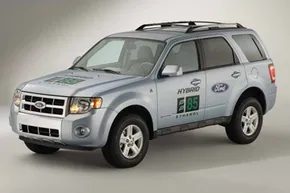
Do not confuse E10 or E15 with E85. E85 is a flex fuel. It contains 51 to 83 percent ethanol. It is not for your standard sedan, SUV, or truck. Only vehicles with a “Flex Fuel” badge are engineered to run on it. They have specific fuel pumps, lines, and engine tuning to handle the high ethanol content.
There are over 4,000 E85 stations across 42 states. If you do not have a flex fuel vehicle, do not put it in your car. The energy density is lower. You will get fewer miles per gallon. The components are not compatible. It is a dead end for non-flex vehicles.
The Economic Reality of Diluted Gasoline
Why is this happening? Corn is cheap. The United States has more than it can process for food. Blending it into gasoline stretches the petroleum supply. It is an economic decision disguised as an environmental one.
The EPA designates which blends are legal. If E15 becomes cheaper to supply than E10, the market shifts. Drivers do not get a vote. They get a choice: buy the diluted fuel or drive less. The agency controls the supply. The consumer absorbs the risk.
Is ethanol bad for your car? For a modern vehicle running E10, probably not. For an older car, or one running E15 in humid climates, the risk is real. Corrosion, degraded rubber, and water contamination are the culprits. You are not just buying fuel. You are buying a gamble on the quality of the supply chain.
Check your vehicle’s owner’s manual. Look for the octane rating. If it says “87,” that is E10. If you see “88,” that is likely E15. Know the difference. Your engine does not have a voice to tell you when it is fighting water in the fuel lines. You have to know what you are putting in.
Phase separation and the water trap
Ethanol is hygroscopic. It pulls moisture from the air.
In a fuel line, a tanker, or the plastic jug in your garage, alcohol grabs that water and holds onto it. Straight gasoline doesn’t do that. The water mixes with the ethanol, forming a heavy layer that sinks to the bottom.
That layer is useless. Your engine can’t burn it.
This phase separation can happen at any point. It might be sitting in a storage tank at the pump, or it might be forming in your fuel reservoir while you’re parked in a humid garage. When that water-ethanol mix separates from the gasoline, you’re left with a fuel mixture that won’t ignite properly.
Why older cars suffer
Even if the fuel doesn’t phase-separate, ethanol is a solvent. It eats things.
Most fuel systems built before the mid-2000s weren’t designed for this. Rubber seals, plastic injectors, and certain metal alloys degrade when exposed to high concentrations of alcohol. Modern cars are built to handle E15, but older cars are not.
There’s another issue: deposits.
Ethanol loosens sludge and varnish that has built up in your fuel injectors over years of driving. It doesn’t dissolve them. It just moves them. Those chunks of old grime travel down the line and can clog narrow passages in the injectors or fuel rails.
The 2012 Auto Alliance study findings
Did E10 or E15 actually hurt engines? A 2012 study by Auto Alliance says yes, for some cars.
They tested vehicles from model years 2001 to 2009. The results were specific:
- Internal engine damage was found in some units.
- Valve and valve seat damage was evident.
- One of the 16 cars tested failed emissions compliance standards. It emitted more pollution than the EPA allowed.
Gas mileage dropped, too. Cars running on E15 required more fuel to travel the same distance. That math doesn’t work in favor of the driver. You’re paying more to go less, or the same distance, with higher fuel consumption.
Modern compatibility and labeling
Are you driving a car from 2015 or newer? You’re probably fine.
Most vehicles manufactured in recent years are designed to handle ethanol blends up to E15 without significant issues. The materials in the fuel system are more resistant to corrosion. The engineering accounts for the solvent properties of alcohol.
But caution is still smart. If you’re running an older vehicle, consider using fuel additives or sticking to lower-ethanol blends. The risk isn’t zero, just lower.
The EPA now requires clear labeling on gas pumps. You need to know what’s in the tank. The goal is to assure users that E15 is safe for most modern vehicles, while still giving you the information to make a choice.
The ongoing debate
Infrastructure for E15 has improved. More drivers know about it now. Surveys show awareness is up.
But misconceptions persist. The agricultural industry pushes for higher blends. They emphasize the benefits. The environmental and consumer groups look at the risks.
Regular updates from industry experts and regulatory bodies matter. The landscape is still shifting. What you need to know changes as data comes in.
Is E15 bad for your car? For most modern vehicles, no. For a 2003 sedan with original parts? Maybe. The data points to valve damage and emissions failures in that older cohort. The choice is yours. The labels are on the pump.