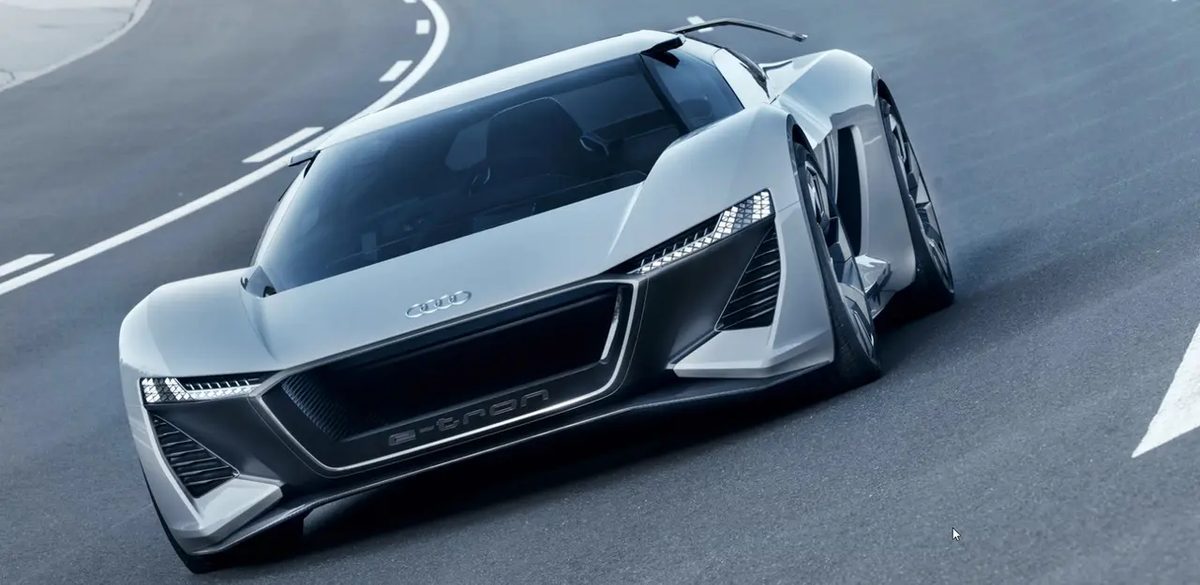
Spotting a supercar still in the development phase is rare. Driving one is next-level. That’s exactly what happened when Alex Hirschi, known globally as Supercar Blondie, got behind the wheel of the Audi AI: Race. The German automaker rarely lets outsiders touch unfinished prototypes. This access is a massive privilege. The AI: Race represents a future where Audi’s electric performance meets exclusive craftsmanship. Production is limited to just 50 units. It’s not a daily driver. It’s a focused piece of engineering.
The Numbers Behind the AI: Race Prototype
The specifications set the stage before you even turn the key. Power comes from three electric motors. One powers the front axle. Two drive the rear. Together they push out 500 kW and 830 Nm of torque. That powertrain allows for a zero-to-100 km/h sprint in just over two seconds. Top speed sits at 299 km/h. These are not theoretical numbers. They are achievable targets for a car built to dominate both road and track.
Energy storage relies on a 95 kWh solid-state battery. The range hits 500 km under the WLTP cycle. Charging is equally aggressive. An 800-volt system can replenish the battery in 15 minutes. This matches the infrastructure standards found in vehicles like the Porsche Taycan. The architecture is designed for rapid turnover. You don’t wait around. You drive.
Cockpit Design and Driver Experience
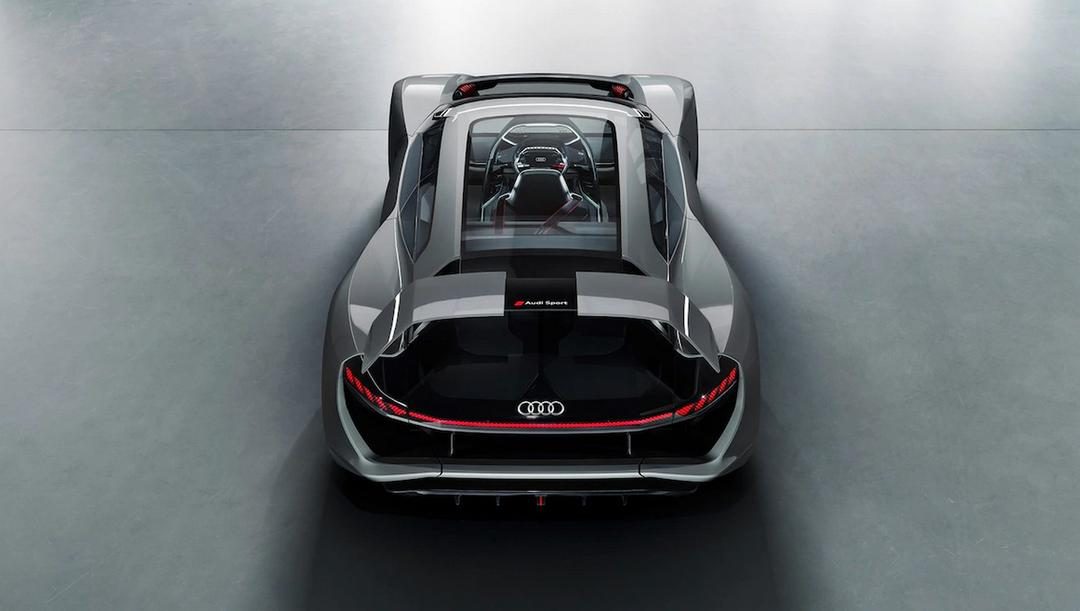
The body is compact. It measures 4.53 meters long and 2 meters wide. The height is just 1.15 meters. The wheelbase stretches 2.70 meters. Audi designed this silhouette to hug racing lines. Aerodynamics play a huge role. The rear diffuser adjusts to increase downforce. The spoiler deploys both upward and outward when needed. Every surface manages airflow.
The interior is where the design truly diverges from tradition. The driver sits inside a central monocoque. This structure houses the bucket seat, steering wheel, and dashboard. It’s not fixed. The entire cockpit slides on a motorized rail. When the door opens, the unit moves laterally to greet the driver. Once seated, it centers itself. This mechanism allows flexibility. The setup can shift to a left-hand configuration. This leaves room for a passenger if required.
Visibility is part of the low-slung experience. The driver sits extremely low. The windshield dips sharply beneath the hood. The hood itself is perforated. This lets the driver see the road ahead through the carbon structure. Information delivery is digital but precise. An OLED transparent screen sits in the direct line of sight. On a circuit, it highlights the ideal racing line in real-time. It’s a high-tech interface for high-speed precision.
Why This Matters for EV Enthusiasts
The Audi AI: Race challenges the notion that electric cars lack engagement. The three-motor setup provides torque vectoring capabilities that internal combustion engines struggle to match. The solid-state battery technology addresses range anxiety and charging speed simultaneously. These are the bottlenecks of early EVs. Audi is solving them with this prototype.
The limited production run of 50 units creates exclusivity. It’s not for the masses. It’s for collectors and track-day enthusiasts who want cutting-edge technology. The integration of the sliding monocoque cockpit is a unique feature. It simplifies entry and exit while maintaining a low center of gravity. The transparent display adds a layer of driver assistance without cluttering the view.
The commercial release date remains unknown. Audi has not announced when these 50 cars will be delivered. The focus is currently on finalizing the engineering. The prototype seen by Supercar Blondie is a glimpse into what’s coming. It’s a statement of intent. Audi is serious about high-performance electric vehicles. The AI: Race is not just a car. It’s a glimpse of the future.
The 911 GT3 RS vs. The Competition
The air is thick. Not just with humidity, but with the smell of burnt rubber and high-octane fuel. You have the Porsche 911 GT3 RS on the left, a machine that treats corners like personal insults. On the right, you have its rivals. The Audi R8 V10 Plus, the Lamborghini Huracán Performante, and the McLaren 720S. They all promise speed. They all promise grip. But only one lets you drive it like a go-kart on steroids.
Let’s talk about the Porsche first. It’s not just fast. It’s intelligently fast. The naturally aspirated 4.0-liter flat-six screams to 9,000 RPM. That’s not a spec sheet number. That’s a feeling. You feel it in your chest. The chassis is stiff. The suspension is adjustable. You can dial in the ride height, the damping, the anti-roll bars. It’s a tool. A precise, expensive tool.
The Audi R8 V10 Plus brings a different flavor. The 5.2-liter V10 is loud. Boxy. Aggressive. It’s mid-engine, sure, but the interior feels more like a cockpit than a lounge. The quattro system gives it confidence in the wet. Rain? Forget it. It just powers through. But does it have the feedback? Not really. It’s powerful. Brutal. But less connected. You’re along for the ride. With the GT3 RS, you’re in the driver’s seat. Literally and figuratively.
Then there’s the Lamborghini Huracán Performante. The active aerodynamics—the ALA system—are the headline. They adjust wing angles in milliseconds based on steering input. Cornering? They stiffen the rear. Braking? They open up to cool the brakes. It’s clever. It’s Italian drama. But the steering feels heavier. Slower. It’s not trying to be a race car. It’s trying to be a supercar that looks like a supercar. The Porsche is a race car that looks like a Porsche.
McLaren’s 720S is the tech bro’s choice. Carbon fiber everywhere. Lighter than the others. The twin-turbo V8 spools up with zero lag. It launches from 0 to 60 mph in 2.8 seconds. That’s terrifying. But the interior? Minimalist. Almost barren. The seats are supportive, yes. But the driving position is weird. You’re not driving. You’re piloting. There’s a detachment. With the Porsche, you’re involved. You’re part of the equation.
Track Days vs. Street Use
You can’t take the GT3 RS to the grocery store. Not easily. The exhaust is loud. The ride is harsh. The visibility is poor. It’s a compromise. A necessary one. But for track days? It’s unmatched.
The track is where the differences become obvious.
- Braking: The Porsche has massive ceramic brakes. They don’t fade. Not even after ten laps. The Audi and Lamborghini have good brakes too. But the pedal feel in the Porsche is linear. Predictable. You know exactly when it’s going to bite.
- Tires: The GT3 RS runs specialized