The alternator isn’t just a nice-to-have. It’s the heartbeat of your car’s electrical system. Without it, you’re running on borrowed time from the battery alone. These things take a beating. Heat, cold, dirt, and pure mechanical stress wear them down. Eventually, they quit.
The Grinding Sound That Means Bad News
Most alternator deaths start with bearing failure. Inside, needle bearings let the rotor spin freely within the stator. Dirt and heat cook these bearings. When they go, the rotor drags. It grinds. Loudly.
You’ll hear it. A high-pitched whine or a deep grind coming from under the hood. If you hear that noise, your alternator is already dying. It might spin inefficiently, or it might seize completely. There’s no fixing a bad bearing. You replace the whole unit.
Why Your Dashboard Light Matters More Than You Think
That battery symbol on your dash? It’s not just for show. When you turn the key, that light glows. It tells you the charging system is live.
Ever notice a faint buzz when the key is on but the engine is off? That’s voltage flowing through the circuit. It’s normal. But if that bulb is burnt out, you’re blind to a massive problem. The car might start fine. You might drive for a week. Then the battery drains. The electrical system collapses. You’re stranded.
A failed warning light hides a failing alternator until it’s too late.
How to Test Alternator Output at Home
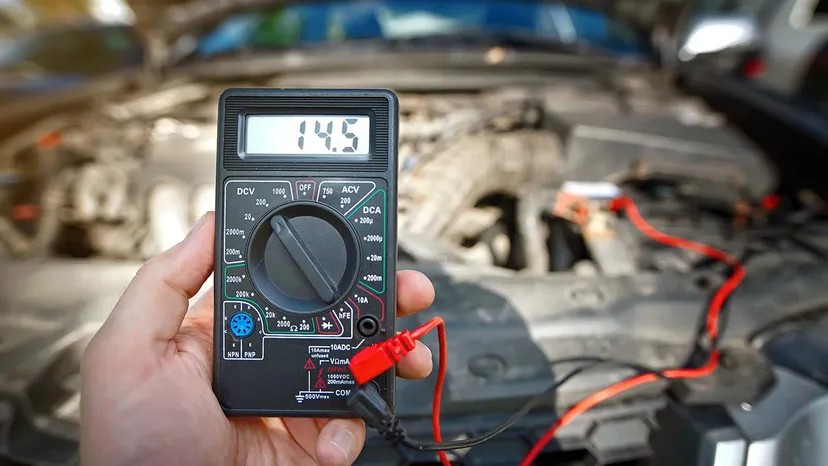
You don’t need a shop to check if your alternator is holding up. You just need a basic voltmeter. Set it to DC voltage. Cars run on direct current.
Here’s the trick:
- Connect the red lead to the positive battery terminal.
- Connect the black lead to the negative terminal.
- Start the car. Keep it in park. Foot on the brake.
- Rev the engine to around 1,000 RPM.
Watch the meter. It should read about 14 volts. If it’s below 12, you have a problem. A three-phase alternator can technically run on one winding, but it’s only one-third as efficient. It won’t keep up.
Now, add the load. Turn on the headlights. Blast the AC. Turn on the radio. Everything that sucks power. Rev the engine again.
The voltage should still sit near 14 volts. If it drops significantly, your alternator is failing under load. It can’t recharge the battery while powering the accessories. That’s a dead giveaway.
Check the Belt Before You Buy a New Alternator
Before you tear into the engine bay, check the serpentine belt. It drives the alternator. If it’s loose, worn, or cracked, the alternator spins too slowly to charge properly.
A bad belt is cheap. Usually less than $20 to replace. A new alternator? That’s a different story. Don’t swap out an expensive part for a cheap fix. Inspect the belt tension and condition first. If the belt is tight and the voltage is still low, then you know. It’s time for a new alternator.