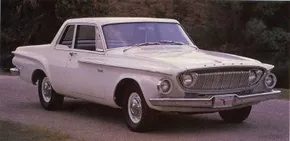
The spotlight didn’t stay on the Dodge Dart 413 for long, but it burned bright enough to prove a point. Before the term “muscle car” was cemented in pop culture, Mopar was already in the heavyweight division. The 1962 Dodge Dart wasn’t just a contender; it was every bit as lethal as what GM and Ford were pushing out. It was the engine that put Mopar on the map.
The 413-cubic-inch V-8 had been lurking in the shadows since 1959. But it stayed tucked away in big Chryslers until 1961. That’s when it finally dropped into smaller Dodges and Plymouths. Output hit 375 bhp. It was decent. Not enough, though. With 400-plus horsepower units from Chevrolet, Pontiac, and Ford creeping onto the scene, Mopar needed more grunt.
Every 413 featured wedge-shaped combustion chambers. The version that dropped in spring 1962 was different, however. It was bred for maximum performance. This specific iteration earned the nickname Max Wedge. It stuck. It’s unofficial but enduring.
Transmission and Hardware Specs
Power delivery was handled by a floor-shift three-speed manual or a fortified pushbutton TorqueFlite automatic. Both were built tough. Limited-slip 3.91:1 gears came standard. If you wanted different ratios, options ranged from 2.93:1 all the way up to 4.89:1.
The Max Wedge wasn’t just an engine swap. It was a package. You got supporting hardware included. Police-car suspension parts were part of the deal. This was serious hardware.
Price tags varied. Depending on the tune level and transmission choice, you’d pay between $545 and $682. That bought you a machine that could hang with the best of them. For a short time, the Dart 413 was the king. Then the next year rolled around, and the focus shifted. But the legacy remained.
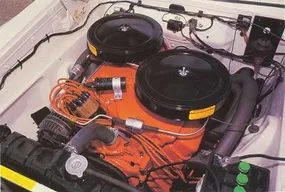
There were two flavors of the beast, but they shared the same hard-edged DNA. Solid lifters. Aluminum pistons. Connecting rods that had been Magnafluxed for integrity. The ignition setup relied on a double-breaker distributor, a mechanical quirk that demanded precise tuning but delivered raw, unfiltered spark.
Air intake was handled by twin Carter four-barrels, each rated at 650 cfm. That dual-carb setup breathed through three-inch headers which swept up along the side of the engine block. Why the unusual routing? To clear the front suspension components, which were tight around the wide V8.
The compression ratio was the primary differentiator. The 11.0:1 Max Wedge version pulled 410 bhp and 460 lb-ft of torque. Step up to the 13.5:1 variant, and you got 420 bhp and 470 lb-ft. The gain in horsepower wasn’t massive, but that extra 10 lb-ft of torque changed how the car felt when you floored it.
Which version did Plymouth push harder? The high-compression 13.5:1 was the serious drag racer’s choice. It needed high-octane fuel and careful maintenance. The 11.0:1 was more forgiving. Still, both engines shared the same visual presence. Those side-exit headers were as much a statement as the numbers on the badge.
You could hear them coming before you saw them. The double-breaker ignition cracked like a whip. The twin carbs sucked in air with a hungry sound. It wasn’t refined. It wasn’t easy to live with. But it moved.
The Weight Drop That Changed the Game
The Max Wedge didn’t just arrive; it crashed into the lineup, and to make room for the noise, Dodge and Plymouth had to strip down their full-size sedans. The 1962 Dart, Polara, Savoy, Belvedere, and Fury all lost two inches of wheelbase. The styling was polarizing—some called it ugly, others called it aerodynamic—but the numbers didn’t lie. By shedding metal, these large cars suddenly weighed as little as the mid-size rivals everyone else was selling. This wasn’t an accident. It was a tactical move to make the Max Wedge viable.
Without that weight reduction, the engine would have been buried under too much mass. Instead, the Dodge Dart 413 became a monster. Motor Trend put a base $2,900 model through its paces and declared it offered more performance per dollar than any other factory-assembled car in America. That’s a bold claim. The car was turning mid-14s in the quarter-mile while hitting over 100 mph box-stock. No one else at that price point could touch it.
Inside the 1962 Dodge Dart 413
To understand why this specific configuration worked, you have to look at the hardware. The 1962 Dart wasn’t just a lighter sedan; it was a chassis built for violence.
Specifications Breakdown
- Wheelbase: 116.0 inches
- Curb Weight: 3,260 lbs (a significant drop from previous iterations)
- Base Price: $3,000
- Production Numbers: NA
The Heart of the Beast
The top available engine was the 413 cubic inch V-8. But this wasn’t the standard street version. We are talking about the OHV (Overhead Valve) Max Wedge setup.
- Displacement: 413 cid
- Fuel System: Dual 4-barrel carburetors
- Compression Ratio: 13.5:1 (high for pump gas, designed for racing fuel)
- Horsepower: 420 hp @ 5,400 rpm
- Torque: 470 lb-ft @ 4,400 rpm
The dual four-barrel setup was key. It allowed the engine to breathe at high RPMs, generating that flat torque curve needed for drag racing. The 13.5:1 compression ratio meant this engine didn’t like regular gas. It wanted leaded fuel and high octane.
Performance Numbers
What did those specs look like on the track?
- 0-60 mph: 5.8 seconds
- Quarter Mile: 14.4 seconds @ 101 mph
For context, 101 mph at the finish line of the quarter-mile was serious business in 1962. Most cars were lucky to clear the track at 90. This Dart was consistently hitting over 100 mph in stock trim.
Why It Mattered
The 1962 Dart 413 proved that size wasn’t a liability if you managed the weight. Competitors were still building heavy cruisers. Dodge realized that if they could shed weight and put a race-engineered block in a sedan, they could dominate both the streets and the strip.
This formula set the stage for everything that followed. The 409 engine in the Chevy Impala had already shaken things up in 1961, but the Dart 413 matched it and then surpassed it in pure efficiency. Ford later joined the 400-horsepower club with the 1962 Galaxie 406, but they were playing catch-up.
The legend of the Dart didn’t end there. It would return in 1968 with the GTS 440, but that was a different era, relying more on aftermarket support. The 1962 model was pure factory intent. The 1963 Plymouth 426 Wedge would become even more extreme—a