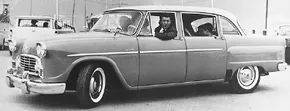
Checker Motors Corporation didn’t start out to build family haulers. Founded in 1922, the Kalamazoo, Michigan-based plant spent decades perfecting the art of the taxicab and airport limousine. While some rumors suggest “pleasure cars” for private buyers appeared as early as 1948, the company officially claimed 1959 as the launch year for civilian models. If you managed to find a Checker dealer—which was rare—you could buy the Superba.
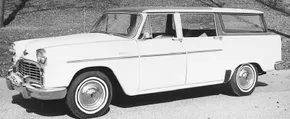
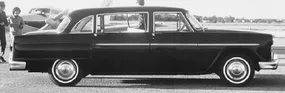
The Superba was essentially a civilian version of the iconic Checker cab. It arrived as a four-door sedan or a wagon, available in standard or Special trim. The difference between the trims was minimal, mostly limited to slightly nicer interior materials. Under the skin, these were the same tanklike vehicles that dominated streets from the mid-‘50s to the mid-‘80s.
Engineering for Durability, Not Style
The chassis was derived from the A8 model, which hit the streets in 1956. It featured a 120-inch wheelbase, which was considered fairly compact for an American car of that era. Weight varied by body style. Sedans tipped the scales at an average of 3,400 pounds. The boxy wagons were heavier, coming in at nearly 3,800 pounds.
Morris Markin, the founder and president, was stubborn about the design philosophy. He refused to change the dumpy, practical shape as long as buyers kept purchasing these “taxi-tough” machines. Consequently, changes were scarce. Outside of noncommercial paint jobs and the removal of the “hire light,” the Superba differed from the A8 only by a front-end facelift that added trendy quad headlamps.
The Heart of the Beast
Power came from a 226-cubic-inch L-head six-cylinder engine manufactured by the Continental Motor Company. This was the same block Kaiser had used in its vehicles. Checker offered this engine in two configurations at the same price point:
- Side-valve version: This unit had a 7.3:1 compression ratio and produced just 80 horsepower. It was likely intended for regions with poor-quality fuel.
- Overhead-valve (OHV) version: This more modern setup featured an 8:1 compression ratio and delivered a respectable 122 bhp.
Drivers could choose between a three-speed column-shift manual transmission or a Borg-Warner automatic.
Practicality Over Comfort
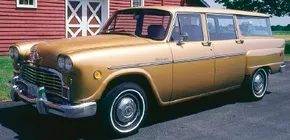
Checker prioritized its taxi heritage in the Superba’s layout. The sedan could be ordered with two rear jump seats, allowing it to carry up to eight passengers. The wagon came with a roll-down tailgate window and a roomy back seat that folded down to create a vast cargo deck.
Interestingly, the seat folding was handled by an electric servo. This electrical gimmick, combined with the different bodywork, made the wagon approximately $350 more expensive than the sedan.
Ride Quality and Safety
While mainstream American cars in 1959 were rolling on 14-inch wheels, Checker stuck with 15-inch rims. This choice provided a smoother ride over the increasingly pothole-ridden streets of urban America. The tall doors and ruler-flat floors were direct reflections of its taxi origins, designed for easy entry, exit, and ample foot space.
Luxury was not on the checklist. Instead of carpeting, the floor featured rubber mats. The headliner was made of pedestrian hardboard. Perhaps most notably, the car lacked many late-‘50s safety features. There were no padded dashboards, sun visors, dished steering wheels, or seatbelts. The dashboard itself was flat-faced with plain round gauges, resembling the interior of a 1951 Plymouth. This interior design would remain completely unchanged until Checker built its final car decades later.
Legacy of the Taxi Cab
The Superba proved that a vehicle designed for high-mileage commercial use could transition to the private market. It wasn’t pretty. It wasn’t fast. But it was durable, practical, and unmistakably Checker.
For more on defunct American cars, see:
-
AMC
-
Duesenberg
-
Oldsmobile
-
Plymouth
-
Studebaker
-
Tucker
Checker Cars of the 1960s
The 1961-1962 Lineup Shifts
Checker pushed for higher nonfleet sales in 1961 by slapping the Marathon nameplate on the Superba Special. They also downsized the rolling stock, switching both Superba and Marathon sedans to 14-inch wheels, while standardizing the overhead-valve engine across the wagon lineup. Pricing stayed flat. The base Superba sedan started at $2,542, while the top-tier Marathon wagon commanded $3,004. Options were pricey though: air conditioning added $411 to the sticker, and power steering was an extra $64.
The model quartet returned for 1962 with one minor tweak: sedans went back to 15-inch wheels. But the real news was Checker’s attempt to crack the luxury market. They introduced the Town Custom limousine, built on a longer 129-inch wheelbase.
Optimistically, they priced this beast at $7,500. It featured a vinyl roof and a privacy division window separating the front and rear compartments, along with a full suite of power options. Demand was, well, low. Production was limited accordingly. Why? Even the most expensive non-limousine Cadillac cost less than this Checker. The math didn’t add up for buyers looking for a chauffeur-driven ride.
Engine Gains and The Chevy Switch
The only change for 1963 was a bump in power. The overhead-valve engine received a boost to 141 bhp across all models.
By 1964, prices crept up about $100, and the Superba name was dropped from the lineup entirely. The shift in direction became undeniable in 1965 when Checker abandoned its own engines for more modern Chevrolet powertrains. The standard unit was a 230-cid six producing 140 bhp. Buyers could opt for the legendary small-block V-8s: the 283 with 195 bhp or the big 327 with 250 bhp.
The Town Custom limo survived but only by special order. The cost to spec it out added up fast: the 283 V-8 cost an extra $110, automatic transmission was $248, and overdrive ran $108.
Stabilizing the Lineup
Checker tried to stabilize the four-model line in 1966 by adding the Marathon Deluxe sedan and a lower-priced limousine at $4,541. It was a short-lived experiment. Both were dropped the following year. However, the Deluxe sedan returned for 1968, and the affordable limousine came back for 1969. The brand was finding its footing, even if the luxury segment remained a niche interest for a company built on durability rather than opulence.
The shift to V-8 engines in post-1964 Checker models wasn’t just a cosmetic update. It changed the car’s personality entirely. Earlier six-cylinder models were adequate, sure. But they lacked the punch needed for the streets. With a V-8, these cabs became noticeably faster.
Power didn’t stay static. The 283 cubic-inch engine got the axe in 1967. In its place came a 307-cid unit. It pushed 200 bhp. But this option was a one-year wonder, available only for 1968. By 1969, the lineup expanded. The 327 was joined by the new 350 small-block. That engine cranked out 300 bhp. It was a serious upgrade for anyone needing more than just idle speed.
Then reality set in. Emissions regulations tightened. By 170, that 300 bhp dropped to 250. The law stripped away horsepower, regardless of what the badge promised.
Costs for these optional engines remained surprisingly low. In 1968, you could add the 307 for just $108. The 327 cost $195. For a fleet buyer or a cab owner, the return on investment was clear. More power meant faster trips. Fewer trips meant less wear on the driver’s patience.
Sales figures reflect a company that knew its niche. Checker didn’t aim for volume in the way Ford or Chevy did. Annual targets sat between 6,000 and 7,000 units. That was enough to keep the factory humming. 1962 remained the peak. The company built 8,173 cars that year. Most were taxis. The rest were likely sold to fleet managers who valued durability over style.
Morris Markin, the founder, had a singular vision. He wanted cars that could survive a taxi’s lifespan. He didn’t care about aerodynamics. He didn’t care about curves. He cared about steel.
This rigidity extended to potential partnerships. Nathan Altman once pitched Checker on building the Avanti II. It was a sleek, fiberglass design. Markin’s response was blunt. He called the Avanti ugly. He wasn’t interested. Checker built bricks that lasted. They didn’t build shapes that turned heads.
The Decline of Checker Cars
The end wasn’t sudden. It was a slow erosion. Competitors offered better fuel economy. Regulations made high-displacement engines harder to certify. And the market shifted toward smaller, more efficient imports. Checker held onto its V-8 roots long after other manufacturers had moved on. By the time the company folded, it had become a relic. A stubborn, powerful relic. But relics don’t sell. They sit in museums or decay in junkyards. Checker chose the latter, fading into the background of American automotive history.
The Slow Death of a Taxi Legend
David Markin didn’t have much time to breathe. He took the wheel at Checker in 1970, right after his father Morris died, but the machinery of the company didn’t shift much until the mid-70s. That’s when Edward N. Cole showed up. The former GM president had retired in 1974 but couldn’t stay idle. He joined Checker to kickstart a new-model development program. It was supposed to be the salvation the company needed. Instead, it was a funeral. Cole died in a plane crash before any of his plans materialized.
The end started in earnest in 1970.
The core issue was simple economics. The Big Three Detroit makers needed fleet sales. They needed them bad when passenger car sales tanked during the OPEC oil embargo in the mid-70s. They needed them again when the decade ended. Checker was small. Low fixed volume. High overhead. They couldn’t compete on price. It was a losing game against factories that ran at scale.
So the numbers dropped. Dramatically.
After 1969, Checker wasn’t moving metal. In 1970, they shipped fewer than 400 units. That’s it. For a whole year. They saw a slight pulse between 1970 and 1974, pushing 600 to 1000 units a year. Then it collapsed again. Less than 500 units thereafter.
Inflation was the killer. The standard sedan wasn’t cheap. By 1973, the sticker price hit almost $4000. By 1975, it was nearing $5400. In 1977, it broke $6000. By 1980, you were looking at close to $8000.
Think about that. That’s Chrysler or Buick money. You were paying luxury-brand prices for a car that was dull, sluggish, and often poorly assembled. Why would a fleet manager buy a Checker when a Chevrolet Caprice or a Ford LTD offered more car for less money? They wouldn’t.
The model lineup shrank as the sales died. The decade began with the usual suspects: the Marathon sedan, the Marathon wagon, and the long-wheelbase Deluxe sedan. There was also a limousine version. It was unprofitable. They dropped the limo after 1971. The wagon lasted until 1974. The sedans hung on until the end.
Under the hood, the engines told a similar story of diminishing returns.
After 1970, the standard engine was the stroked 250 cubic-inch inline-six, based on the Chevy 230. It made 145 horsepower through 1971. Then the ratings dropped. 100 to 115 horsepower thereafter. Not enough for modern tastes.
The V-8 remained an option, but it was downgraded. The 350 cubic-inch small-block was rated between 145 and 170 bhp SAE net from 1972 to 1979. Low for a V-8. Even in 1976, when a
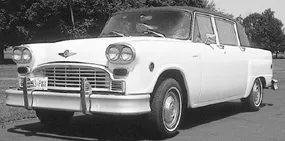
Checker stuck to its original blueprint with a stubbornness that bordered on delusion. Suggestions to update the platform were ignored. Then came 1974. Federal crash standards forced the addition of massive, girder-like bumpers. The result was a car that didn’t just look aged—it looked grotesque.
A sleek prototype designed by Ghia in 1970 was rejected. So was “Galva II,” a 1975 proposal by Autodynamics. That design favored simple, rectilinear lines to minimize tooling costs. Money was likely the real killer there, but management’s rigidity played a role too.
Then Ed Cole arrived.
Cole had a plan for a new Checker, targeted for 1983. It was to be a boxy, square-lined four-door hatchback. Front-drive mechanics borrowed from the GM X-car compacts were in the works. Cole knew this when he joined.
The chassis was a sturdy box-section design. Three versions were planned:
* A 109-inch wheelbase six-passenger model.
* A 122-inch eight-seater.
* A 128-inch nine-seater.
Plastic body panels were considered. A rear suspension using solid rubber springs was on the table. A full-scale mockup was built.
Cole died before it could move forward. Momentum stalled. The taxi business was shrinking. Checker ceased production in Kalamazoo in mid-1982.
Now, these cars are becoming collector items. Town Limousines. The huge “Aerobus” wagons used for airport shuttles. Morris Markin would be shocked.
For more on defunct American cars, see:
- AMC
- Duesenberg
- Oldsmobile
- Plymouth
- Studebaker
- Tucker